
In today’s dynamic digital economy, the quest for supplementary income has become more accessible than ever.
For individuals seeking to bolster their finances without requiring extensive prior experience or a significant time commitment, the world of microjobs presents a compelling and achievable solution.
While the concept of “instant” income needs careful clarification, the ability to access earning opportunities quickly and receive payments relatively fast is a tangible reality for millions worldwide.
This article serves as a strategic blueprint for beginners aiming to unlock up to $2,350 by leveraging five distinct microjob categories.
We will delve into what microjobs truly entail, offer actionable steps to get started, and demonstrate how consistent engagement can transform small, discrete tasks into significant financial gains.
The growth of the gig economy, which had a market size of $556.
7 billion in 2024 and is projected to exceed $1.
8 trillion by 2032, underscores the immense potential for flexible earning methods.
As of 2024, there are an estimated 76.4 million freelancers in the United States, a number that has steadily increased, highlighting the mainstream acceptance of these flexible work arrangements.
Embracing microjobs can be a powerful first step towards greater financial independence.
The Promise of “Instant” Income

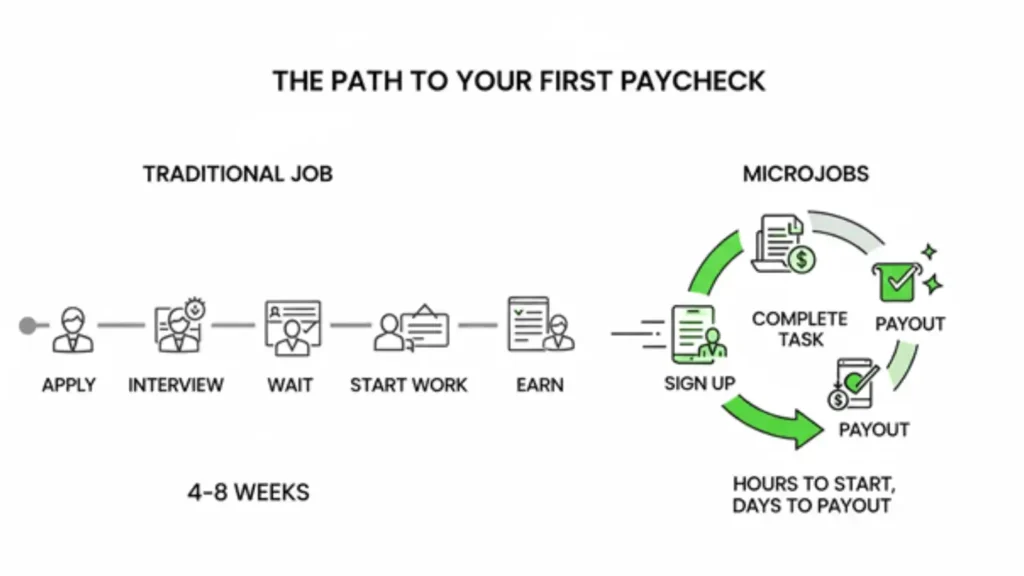
Microjobs provide immediate access to earning opportunities and faster payout cycles compared to the lengthy hiring and payroll process of a traditional job.
When we speak of “instant” income derived from microjobs, it’s crucial to define this term precisely.
It does not imply receiving substantial sums of money immediately upon registration.
Instead, “instant” primarily refers to the immediate access to earning opportunities once you’re approved on a platform.
This means you can often begin undertaking tasks within minutes or hours of signing up, a stark contrast to the weeks or months it might take for traditional employment processes.
Furthermore, “instant” encompasses relatively quick payout cycles.
Reputable platforms enable you to convert your accumulated earnings into usable funds, often via convenient methods like PayPal or direct deposit, within a reasonable timeframe, typically ranging from a few days to a couple of weeks, depending on the platform’s policies.
This immediacy in both opportunity and payout is a key advantage of microjobs compared to more conventional employment models or complex freelance projects.
The real “instant” gratification comes from the consistent accumulation of earnings through steady effort and smart task selection.
Why Microjobs Are Your Best Starting Point

Microjobs are exceptionally well-suited for beginners due to their remarkably low barrier to entry.
Unlike traditional roles that necessitate specific qualifications, degrees, or extensive training, microjobs typically require only basic computer literacy, a stable internet connection, and the ability to follow instructions accurately.
This democratizes the opportunity to earn online, making it accessible to a broad audience.
The flexibility inherent in microjobs is another significant advantage.
You can often choose when and where to work, fitting earning opportunities around existing commitments, whether that’s a full-time job, family responsibilities, or studies.
This flexibility can be incredibly liberating; for example, remote workers often save considerable time daily, with a portion of this time frequently reinvested into their work, showcasing the productivity gains possible.
The growing prevalence of freelance work—with 4.7 million independent workers in the U.S. earning over $100,000 in 2024 alone—demonstrates that flexible work is not only viable but can be highly lucrative.
Microjobs represent the most straightforward and immediate gateway into this expanding gig economy, providing practical experience and earning potential from day one.
Setting Realistic Expectations for Earning $2,350

Achieving a target of $2,350 through microjobs is an ambitious but entirely attainable goal, provided it’s approached with a strategic, multi-faceted methodology.
This objective necessitates a diversified income strategy, combining earnings from several different types of microjobs rather than relying on a single source.
It demands consistent dedication and a clear understanding that earnings are cumulative – small amounts earned consistently will build over time.
While individual tasks might offer modest payouts, successfully completing a high volume of these tasks and strategically engaging with higher-paying opportunities within each category are the keys to accelerating progress toward the $2,350 mark.
This article will provide a realistic breakdown of how each of the five recommended microjob types can contribute to this financial target, offering a tangible roadmap for beginners.
It’s important to remember that while the access to tasks is “instant,” building substantial income requires sustained effort and a commitment to regular engagement.
What Are Microjobs and Why They’re Perfect for Beginners

Microjobs, also known as micro-tasks, are small, discrete online assignments that can be completed quickly, typically through specialized platforms.
They are characterized by their simplicity, short completion times, and the minimal prerequisite of extensive prior training.
This makes them an ideal starting point for individuals looking to earn money online, test the waters of the gig economy, or supplement their existing income.
Small Tasks, Big Potential

At their core, microjobs are unit-based assignments designed for efficiency, both for the worker and the client.
Examples include categorizing images, transcribing short audio clips, verifying data entries, participating in online surveys, or testing a website’s functionality.
While each individual task might only pay a few cents to a few dollars, the sheer volume of tasks available across various platforms, combined with strategic selection and consistent effort, allows for significant cumulative earnings over time.
The global microtasking market, a testament to this potential, is projected to reach substantial figures in the coming years, reflecting its growing importance in the digital economy and its role in feeding data to AI and machine learning initiatives.
Low Barrier to Entry, Flexibility, and Skill Development

The primary allure of micro jobs for beginners is their exceptionally low barrier to entry.
Most require only basic computer literacy and an internet connection, meaning almost anyone with digital access can start earning.
Secondly, flexibility is paramount.
You can work whenever and wherever you have access, which is particularly beneficial for those juggling other responsibilities.
Remote workers, for instance, often report significant time savings, a portion of which can be directly reinvested into these flexible earning opportunities.
Finally, microjobs offer an invaluable, albeit often overlooked, opportunity for skill development.
Consistently completing tasks helps refine attention to detail, improve typing speed, enhance critical thinking, and build familiarity with various online platforms and tools.
These foundational skills can be stepping stones to more complex work-from-home jobs or freelance roles.
How Beginners Can Succeed

Success in micro jobs as a beginner hinges on a few core principles.
First, choose reputable platforms that offer reliable payment systems, such as PayPal, and preferably direct deposit options.
Second, create a detailed and honest profile; this is crucial for platforms to match you with relevant tasks and surveys.
Third, start with tasks that align with your current comfort level and gradually expand your repertoire as you gain confidence.
Fourth, maintain accuracy and speed, as these are often key factors in task qualification and can lead to higher earning potential.
Finally, consistency is crucial.
Regularly dedicating time to microjob platforms will build momentum and unlock greater earning potential, paving the way for significant financial targets like $2,350.
The $2,350 Blueprint: Substantiating Your Earning Goal

Achieving a substantial income target like $2,350 from micro jobs is not merely a possibility; it’s a structured outcome achievable through a combination of strategic effort and diverse income streams.
This blueprint focuses on integrating five distinct, beginner-friendly microjob categories, demonstrating how each component contributes to the overall financial goal.
It is a testament to the power of diversification and consistent effort in the digital earning space, transforming small, accessible tasks into a significant financial boost.
By strategically combining these opportunities, beginners can create a reliable pathway toward their target income and build valuable experience.
Combining Diverse Income Streams for Impact

Our methodology for reaching $2,350 involves integrating five complementary micro job types:
Specialized Micro tasking & Data Annotation, High-Paying Online Surveys & Focus Groups, Entry-Level Micro-Freelancing, User Testing & Website/App Feedback, and Cashback & Rewarded Deals Maximization.
Each offers a unique avenue for earning, and when combined strategically, they create a robust and multifaceted income-generating system.
This approach leverages the accessibility of simple tasks, the insight-driven nature of surveys and testing, the skill-based potential of micro-freelancing, and the passive income opportunities from smart shopping and rewarded deals.
This diversified strategy is key to both reaching your financial target and building a sustainable online earning habit, moving you closer to financial independence.
A Realistic Breakdown of How Each Microjob Contributes
To realistically reach $2,350, we can project a balanced contribution from each microjob category over a period of consistent engagement (e.g., a few months of dedicated effort).
- Microjob 1: Specialized Microtasking & Data Annotation: Aim for $500-$700.
- This involves consistently completing a high volume of small tasks on platforms like Amazon Mechanical Turk or Clickworker.
- Microjob 2: High-Paying Online Surveys & Focus Groups: Aim for $600-$800.
- This involves focusing on higher-paying surveys and qualifying for lucrative focus groups through platforms like Survey Junkie and Toluna Influencer.
- Microjob 3: Entry-Level Micro-Freelancing: Aim for $500-$700.
- This involves starting with small, well-defined gigs on platforms like Fiverr or Upwork, and gradually building a reputation for services like basic proofreading or social media management.
- Microjob 4: User Testing & Website/App Feedback: Aim for $300-$400.
- Consistent participation in website and app tests on platforms like UserTesting.
- com can provide steady income.
- Microjob 5: Cashback & Rewarded Deals Maximization: Aim for $200-$300.
- Maximizing returns on everyday spending through money-making apps like Rakuten and Ibotta can yield passive earnings.
- This breakdown highlights that no single microjob type carries the entire burden.
By diligently engaging with each, you create a diversified income stream that collectively drives you towards your $2,350 goal.
Consistency is Key: The “Instant” Advantage of Consistent Effort
The “instant” aspect of microjobs truly comes into its own when consistent effort is applied.
While you gain immediate access to tasks upon joining a platform, sustained engagement is what transforms this access into meaningful and substantial income.
The freelance economy is booming, with studies indicating its significant contribution to the U.S. economy.
This growth is fueled by individuals consistently dedicating time to these opportunities.
By committing to regular participation across these five microjob categories, you effectively leverage the immediacy of microjob platforms to build steady, substantial earnings.
This consistent effort allows you to tap into the full potential of each platform and steadily climb towards your $2,350 target.
Microjob 1: Specialized Microtasking & Data Annotation
Specialized microtasking and data annotation represent a foundational layer for online earnings, offering a steady stream of small tasks that can accumulate into significant income over time.
These tasks are crucial for businesses and researchers needing to process, categorize, and label vast amounts of data to train AI models, improve algorithms, or conduct market research.
For beginners, these roles provide a straightforward entry point into the digital workforce.
What It Is: Deconstructing Complex Tasks into Simple Steps
Microtasking involves breaking down large, complex projects into many small, individual tasks that can be completed by numerous workers online.
Data annotation, a key subset of microtasking, specifically involves labeling, tagging, or categorizing data—such as images, text, audio, or video—to make it usable for machine learning algorithms and AI development.
While these tasks can often be repetitive, they require focus, attention to detail, and strict adherence to specific instructions to ensure data quality.
Beginner-Friendly Entry Points: Image Labeling, Data Categorization, Content Moderation
For beginners entering the world of microtasking, entry points are typically straightforward and require minimal specialized knowledge.
Image labeling might involve tasks like drawing bounding boxes around objects in photos, identifying specific features, or classifying images into predefined categories.
Data categorization could mean sorting customer feedback into sentiment categories (positive, negative, neutral) or assigning keywords to articles.
Content moderation involves reviewing user-generated content, such as comments or posts, to ensure it complies with platform guidelines, flagging anything inappropriate or harmful.
These roles primarily ask for good judgment, common sense, and the ability to follow detailed instructions.
Platforms to Explore: Premise and Other Niche Microtasking Sites
While platforms like Amazon Mechanical Turk are widely recognized, several niche sites offer focused opportunities that can be particularly beginner-friendly.
Premise, for example, is an excellent platform often involving photo-based tasks related to local conditions, retail auditing, or market research.
Other sites like Clickworker or Appen specialize in various types of data annotation and microtask opportunities, often including transcription, translation, and data verification.
Exploring these platforms reveals a diverse range of tasks suited for individuals starting their online earning journey, many of which may partner with upwards of 600 brands for various data collection initiatives.
Earning Potential & How to Maximize It: Volume, Accuracy, and Task Selection
The earning potential in microtasking is directly tied to the volume of tasks completed and the accuracy of your work.
Completing more tasks per hour naturally increases your output.
High accuracy is crucial; it ensures you remain qualified for tasks, avoid account penalties, and can potentially earn bonuses or be promoted to higher-paying tasks.
Strategic task selection is also vital; prioritizing tasks that offer a better pay-per-minute ratio will accelerate your earnings.
Aiming to dedicate several hours per week to these platforms can yield significant results towards your $2,350 goal, as consistent work in data annotation can contribute $500-$700 towards your target.
Step-by-Step: Creating Your Profile and Finding First Tasks
- Sign Up: Visit the chosen microtasking website (e.g., Premise, Clickworker, Amazon Mechanical Turk) and complete the registration process.
- Profile Completion: Fill out your profile thoroughly, providing accurate information about your skills, interests, and any relevant experience. This helps platforms match you with suitable tasks.
- Tutorials/Qualification Tests: Many platforms require you to pass a short qualification test or complete tutorials to ensure you understand task requirements and quality standards.
- Browse and Select: Navigate to the task marketplace and select available tasks that match your qualifications and interest.
- Start with simpler, well-understood tasks to build confidence and a positive performance record.
Tips for Success: Building a Reputation and Expanding Your Task Repertoire
Build a strong reputation by consistently submitting high-quality work.
Platforms often track your performance metrics, and a good record can unlock more complex, interesting, and better-paying tasks.
Don’t hesitate to try different types of tasks to discover what you excel at and enjoy most.
As your experience grows and your accuracy is proven, you can tackle more challenging projects, further boosting your earning potential and expanding your skillset, which might even open doors to roles like a Content Writer for content moderation guidelines.
Payment Methods: Direct Deposit, PayPal, and Other Options
Most microtasking platforms offer various payment methods to cater to a global user base.
PayPal is a widely used and convenient option for international transfers, facilitating quick transactions.
Direct deposit into your bank account is also a common and secure method in many regions.
Ensure you check the platform’s specific payment terms, including minimum payout thresholds and payment schedules, to effectively manage your cash flow and plan when you can access your hard-earned money.
Microjob 2: High-Paying Online Surveys & Focus Groups
Participating in online surveys and focus groups is a direct and accessible way to monetize your opinions and contribute valuable insights to market research.
While standard surveys might offer lower payouts, focusing on premium opportunities and understanding how to qualify for higher-paying studies can significantly boost your earnings and directly contribute to your financial goals.
These platforms are often a cornerstone for exploring the value of your digital browsing activity.
Beyond Basic Surveys: Accessing Premium Market Research Opportunities
Many people associate surveys with meager earnings.
However, the market research industry is a multi-billion dollar sector where companies actively seek detailed consumer insights to inform product development, marketing strategies, and business decisions.
Premium opportunities within this space include longer, more in-depth surveys that require detailed responses, product testing where you use and review products, and online focus groups, which are highly sought after and compensate participants generously for their time and active engagement.
These are prime examples of community monetization in action, where collective feedback drives business strategy.
What to Look For: Longer Surveys, Product Testing, and Online Focus Groups
When seeking higher earnings, prioritize surveys that are longer than 15-20 minutes, as they typically offer better compensation proportional to the time invested.
Product testing involves receiving products, using them as directed, and providing detailed feedback—often with the added benefit of keeping the product for free.
Online focus groups, which are usually conducted via video conference, are highly valuable and can pay substantially more for your active participation, discussion, and willingness to share candid opinions.
These opportunities are designed to gather rich qualitative data.
Top Platforms: Survey Junkie, Toluna Influencer, and Dedicated Focus Group Sites
Survey Junkie is a highly popular and user-friendly platform known for its steady stream of surveys tailored to various demographics.
Toluna Influencer is another excellent platform offering a mix of surveys, product tests, and polls, often with attractive reward options.
For higher-paying focus groups, it’s advisable to look for specialized market research panels or agencies that recruit participants for in-depth studies.
Sites like Respondent.
io or User Interviews are excellent resources for finding these premium opportunities, often connecting you with companies seeking specific consumer profiles for studies that might involve 600 brands.
Earning Potential & How to Qualify for Higher Payouts
The earning potential for surveys can range from a few dollars for short, quick surveys to $50-$100 or even more for participating in focus groups and extensive product tests.
To qualify for these higher payouts, maintaining a detailed and honest profile is absolutely crucial.
Platforms use your demographic information, interests, and lifestyle habits to match you with relevant studies.
Completing screener questions accurately and honestly ensures you are invited to studies where your opinion is genuinely valued, leading to better-paying opportunities and more relevant invitations.
Step-by-Step: Setting Up a Detailed Profile and Screening Smartly
- Sign Up: Register on reputable survey and market research platforms like Survey Junkie or Toluna Influencer.
- Complete Your Profile: Fill out every section of your profile comprehensively.
- Be detailed about your demographics, interests, habits, and professional background.
- This detailed profile is your key to unlocking better and more frequent opportunities.
Screening Strategy⚡
Read screening questions carefully and provide honest, consistent answers.
If a survey isn’t a good fit or you don’t meet the criteria, don’t force it; this maintains your profile’s integrity and saves you time.
Tips for Success: Honesty, Consistency, and Leveraging Sign-Up Bonuses
Honesty in your profile and survey responses is paramount for building trust with research companies and ensuring you receive relevant opportunities.
Consistency in participation keeps you visible on platforms and increases your chances of being invited to more lucrative studies.
Many platforms offer sign-up bonuses or rewards for completing your profile, which can provide an initial boost towards your earning goal, acting as a valuable incentive to get started.
How You Get Paid: PayPal, Free Gift Cards (e.g., Amazon, Starbucks, iTunes), and Rewards
Payment methods vary across platforms, but PayPal is a common and convenient option for direct cash payouts.
Many platforms also offer free gift cards to popular retailers like Amazon, Starbucks, or iTunes, or points-based rewards systems that can be redeemed for cash or vouchers.
Always check the minimum payout thresholds to understand when you can cash out your earnings and plan your redemption strategy.
Microjob 3: Entry-Level Micro-Freelancing (Content & Simple Graphics)
Entry-level micro-freelancing allows you to leverage basic creative or administrative skills for small, project-based work.
Platforms like Fiverr and Upwork provide marketplaces where you can offer services to clients worldwide, turning your existing skills into income with minimal upfront investment.
This microjob category is ideal for those who want to move beyond simple tasks and engage in more skill-specific gigs.
Definition: Small, Skill-Based Gigs
Entry-level micro-freelancing involves offering services that require minimal specialized software knowledge or extensive prior professional experience.
These are typically small, clearly defined tasks that can be completed within a few hours or a day.
Think of tasks like writing short product descriptions, crafting social media posts, proofreading brief texts, or creating simple graphics using user-friendly tools.
Services: Basic Proofreading, Social Media Post Writing, Simple Graphic Creation
For beginners, viable services include:
- Writing: Crafting blog post outlines, product descriptions, social media captions, or email subject lines.
- Focus on clear, concise word usage.
- Proofreading/Editing: Reviewing short documents, website copy, or social media posts for grammatical errors and typos.
- Simple Graphics: Designing basic social media banners, logos, or infographics using free tools like Canva.
- This is a fantastic way to explore design skills without needing complex software.
- You could even offer services as a basic Canva Graphic Designer.
- Virtual Assistant Tasks: Offering services related to social media management, scheduling appointments, or basic data entry as a Virtual Assistant.
Platforms: Fiverr, Upwork (Focus on Entry-Level)
Fiverr is particularly ideal for offering services starting as low as $5, making it perfect for beginners testing the waters and building a portfolio.
You create “gigs” for specific services.
Upwork is another large platform where you can bid on projects or create a profile to attract clients seeking your skills.
For entry-level roles on both platforms, focus on smaller, clearly defined tasks to build your profile and gather positive reviews, which are essential for future success.
Earning Potential & Scaling: $5 Gigs to Consistent Clients
Starting on Fiverr, you might offer gigs for $5-$10.
As you gain positive reviews and build a portfolio, you can gradually increase your prices and offer more complex packages or premium services.
On Upwork, project bids can range from tens to hundreds of dollars depending on the scope and your experience.
The key is to steadily increase your rates and the complexity of projects you take on as your experience and reputation grow, potentially evolving into a more consistent Virtual Assistant role over time.
This can also lead to opportunities in content writing or specialized editing.
Step-by-Step: Profile, First Gig
- Choose Your Platform: Select Fiverr or Upwork based on your preference for fixed-price gigs or bidding on projects.
- Create a Strong Profile: Clearly outline your offered services, highlight any relevant skills (even if self-taught), and use a professional profile picture.
- Define Your First Gig/Service: Package your service clearly, specifying exactly what the client will receive and setting a competitive, affordable price for your first few offers to attract early clients.
- Deliver Excellent Service: Over-deliver on your first few projects to secure positive reviews, which are critical for attracting future clients.
Tips for Reputation: Client Attraction, Portfolio
Actively seek out clients by browsing project listings or promoting your Fiverr gigs.
Respond to inquiries promptly and professionally.
The cornerstone of freelance success is client satisfaction, and positive reviews are your most valuable currency. Consider building a simple online portfolio showcasing your work, even if it includes examples you created for practice or personal projects related to faceless content creation.
Payment: PayPal, Payoneer, Direct Deposit
Platforms like Fiverr and Upwork offer various secure payment methods, including PayPal, Payoneer, and direct bank deposits.
Familiarize yourself with their payout schedules and minimum withdrawal amounts to ensure you can easily access your earnings.
Microjob 4: User Testing & Website/App Feedback
Companies are continuously investing in improving their digital products, and your perspective as a user is invaluable.
User testing allows you to earn money by providing your opinions and feedback on websites and apps, directly contributing to a better user experience and helping identify potential issues before they impact a wider audience.
This form of online activity directly translates your browsing habits into income.
What It Involves: Getting Paid for User Opinions
User testing platforms recruit individuals to test websites, apps, or software.
You’ll typically be given a set of tasks to perform while using a screen recording tool and your microphone to speak your thoughts aloud.
This direct feedback helps companies identify usability issues, bugs, and areas for improvement.
The entire process is designed to be privacy compliant, ensuring your personal data and browsing habits are handled securely.
Types of Tests: Usability, App Feedback, Browsing Activity
Tests can range from completing specific actions on a website (e.
g., finding a product and adding it to a cart) to navigating through an app and describing your experience.
Some tests might involve browsing specific websites or completing online forms, all while articulating your thoughts and observations about the interface, navigation, and overall functionality.
Your digital browsing activity is central to these tests.
Leading Platforms: UserTesting.
com, Userlytics, TryMyUI
Platforms like UserTesting.com, Userlytics, and TryMyUI are leaders in the user testing field, connecting businesses with testers globally.
Signing up is free, and once your profile is approved, you’ll receive notifications for available tests that match your demographic profile and interests.
These platforms often require a secure security service and security solution to protect user data from online attacks.
Earning Potential & Frequency: Tests Per Goal
Each user test typically pays around $10-$20 for about 15-20 minutes of your time.
The frequency of available tests depends on your demographic profile and the demand from companies seeking your specific insights.
Consistently taking available tests can contribute significantly to your $2,350 goal; for example, completing 20-30 tests could earn you $200-$600, depending on the platform and test type.
This offers a steady income stream that complements other microjobs.
Step-by-Step: Sign-up, Sample Tests, Environment Setup
- Register: Sign up on reputable user testing platforms.
- Complete Profile: Provide accurate demographic and technical information.
- Be honest about your digital habits.
- Take Practice Tests: Most platforms require you to complete a practice test to assess your ability to articulate thoughts clearly and follow instructions.
- This demonstrates your suitability for providing quality feedback.
- Set Up Your Environment: Ensure you have a stable internet connection, a functioning microphone, and a quiet space to record your feedback without distractions.
Tips: Quality Feedback, Articulation
The quality of your feedback is crucial.
Speak clearly and honestly about your experience, providing specific examples of what you liked, disliked, or found confusing.
Avoid simply saying “I don’t like it”; explain why you don’t like it, what specific issues you encountered, and how you think it could be improved.
This thoughtful opinion is precisely what companies pay for, making your articulate feedback a valuable commodity.
Payment: PayPal, Direct Deposit
User testing platforms typically pay via PayPal or direct deposit.
Payouts are usually processed within a week or two after test completion, offering a reliable and relatively quick way to receive your earnings.
Microjob 5: Cashback & Rewarded Deals Maximization
This approach transforms your everyday shopping into an income stream.
By strategically utilizing cashback apps and rewarded deals, you can earn money back on purchases you would make anyway, turning ordinary spending into a form of passive income.
It’s a smart way to ensure your money works harder for you, even as you shop for essentials or desired items.
Passive Earnings: Turning Spending into Income
Cashback platforms partner with retailers to offer a percentage of your spending back to you, effectively turning expenses into income.
This is a form of passive income because it requires minimal additional effort beyond linking your accounts or activating offers before you shop.
It’s a seamless integration into your existing spending habits, making it one of the most effortless ways to boost your income.
Key Platforms & Strategies: Rakuten, Ibotta, Swagbucks (for Shopping), Stacking Deals
Platforms like Rakuten offer cashback on purchases from thousands of online retailers, simply by starting your shopping journey through their portal.
Ibotta provides cashback on groceries and other in-store purchases through digital coupons and receipt scanning.
Swagbucks also offers cashback for online shopping, alongside other earning opportunities like surveys and watching videos.
Stacking deals involves combining cashback offers with store discounts, coupon codes, or loyalty program rewards for maximum savings and returns.
This can even extend to specific promotions like Halloween Snacks, where you can get cashback on seasonal purchases.
Earning Potential & Boosting: Linking Accounts, Activating Offers
Your earning potential here directly correlates with your spending habits.
By consistently using these platforms for your regular purchases—whether online or in-store—you can easily accumulate several hundred dollars a year.
Boosting your earnings involves actively checking for new offers, referring friends to the platforms, and taking advantage of special promotions or increased cashback rates.
Participating in programs like the Fetch Creator Club can also offer unique rewards.
Step-by-Step: Account Linking, Offer Activation, Proof Submission
- Choose Platforms: Sign up for reputable cashback and rewards apps like Rakuten, Ibotta, or Swagbucks.
- Link Accounts/Activate Offers: Link your credit/debit cards or activate specific offers within the app before you make a purchase, depending on the app’s functionality.
- Shop as Usual: Make your purchases through the app’s portal or in-store as you normally would.
- Ensure you’re buying items for which you’ve activated offers.
- Submit Receipts (if applicable): For in-store purchases, scan and submit your receipts as required by apps like Ibotta to claim your cashback.
Your Journey to Consistent Online Income
The path to unlocking $2,350 through beginner microjobs is clear, achievable, and empowering.
By strategically integrating specialized microtasking, high-paying online surveys and focus groups, entry-level micro-freelancing, user testing, and smart cashback strategies, you create a robust system for generating income.
Remember that “instant” earnings from microjobs refer to immediate access to opportunities and relatively quick payout cycles, not immediate large sums of money.
The true power lies in consistency and diversification.
As the freelance workforce continues its impressive growth—with studies indicating a substantial portion of the U.S.
workforce engaging in freelance work—embracing these accessible online earning opportunities is a wise and forward-thinking move.
The gig economy’s significant contribution to the U.S. economy further validates the potential of these flexible work arrangements.
By dedicating time to platforms like Survey Junkie and Toluna Influencer, you can capitalize on your opinions.
Becoming a Virtual Assistant for a few hours a week can offer steady income, often paid via direct deposit.
Engaging with money-making apps for tasks and rewarded deals can provide quick wins and sign-up bonuses.
Exploring faceless content creation or becoming a TikTok Video Editor can tap into the booming short-form video market, potentially earning through programs like the TikTok Creator Rewards Program.
Even engaging with paid games or exploring concepts like play-to-earn (P2E) games, while requiring more research, offers alternative avenues if approached cautiously.
Beyond these immediate microjobs, the skills you hone—whether in social media management, basic content writing, or providing feedback—can pave the way for more substantial work-from-home jobs.
Furthermore, the income generated can be a foundation for future financial growth, potentially leading to investments in digital templates, or even exploring avenues for community monetization.
The crucial first step is to begin.
Choose one or two areas that resonate with you, create your profiles, and start completing tasks.
Your journey to consistent online income and greater financial independence begins today.
