

Many founders begin their journey with a laptop, a caffeine addiction, and a vision of building a Software as a Service (SaaS) empire.
They dream of a subscription-based revenue model that generates wealth while they sleep.
However, most hit a wall at $200,000 in Annual Recurring Revenue (ARR). At this threshold, the “hacker” mindset—so effective in the early days—becomes a liability.
To reach $1 million ARR, you must transition from a solo builder to an operator of a scaling machine.
Whether you are building Vertical SaaS for a specific industry or a broad SMB SaaS tool, the jump to $1M requires moving beyond the “lifestyle” trap.
This blueprint outlines how private SaaS companies shift from manual chaos to repeatable growth, bridging the gap between technical product build and enterprise-grade operations.
The Reality of the $1M ARR Journey: Why Most SaaS Startups Plateau

The path to $1M ARR is rarely a straight line; it is a series of broken systems. Most founders fail because they confuse “activity” with “growth.”
They remain stuck in manual intervention, failing to build the processes necessary to support larger client volumes.
Unlike publicly traded companies that prioritize quarterly predictability, private companies in the early growth stage often oscillate between survival and saturation. If your processes don’t scale, your growth will hit a ceiling the moment your personal bandwidth is exhausted.
Moving Beyond the “Micro-SaaS” Mindset

The Micro SaaS trend often encourages small, lifestyle-focused businesses. While viable, this mindset often limits ambition.
If your goal is the million-dollar mark, you must reject the notion that small is sufficient. A lifestyle business relies on the founder’s constant presence; a high-growth SaaS business relies on a robust architecture that functions independent of the founder.
You must stop optimizing for convenience and start optimizing for repeatability, ensuring your business model can serve the medium sector and beyond without collapsing under its own weight.
The Three Pillars of Scaling: Validation, Distribution, and Retention
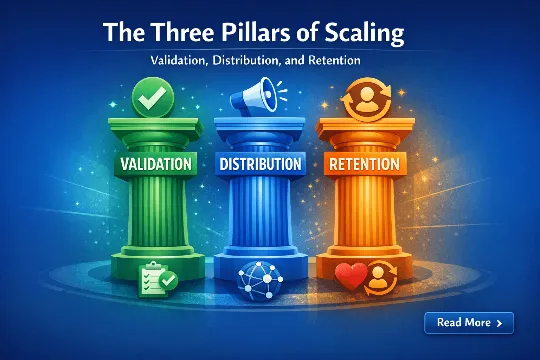
To cross the $1M barrier, you must master three distinct domains. First, validation ensures you are solving a genuine, high-value problem. Second, distribution is the engine that fills your funnel.
Third, retention is the gravity that keeps your revenue from leaking. If any pillar is weak, your business will plateau as soon as the initial excitement fades.
Think of this as the “animal framework”: you need the agility of a gazelle to find your market and the strength of a gorilla to defend your market share.
Finding the “Hair-on-Fire” Problem through Customer Interviews

Market research is not about reading reports; it is about finding a “hair-on-fire” problem.
Conduct deep customer interviews to identify pain points so acute that users are desperate for a solution.
If a customer is not actively seeking an answer, they will not pay. Your product must be a painkiller, not a vitamin.
Use this process to refine your idea generation phase, ensuring the core problem is large enough to support a million-dollar business.
The Operator-Proof Validation: Getting Paid Before You Build

True validation is currency, not compliments. Create a landing page that describes your solution and implement a “First-user plan” or waitlist.
If users provide payment information before the product exists, you have true validation.
This “operator-proof” approach ensures you aren’t building in a vacuum, protecting your time and capital.
Choosing a Lean Tech Stack for Speed: React, TypeScript, and Supabase
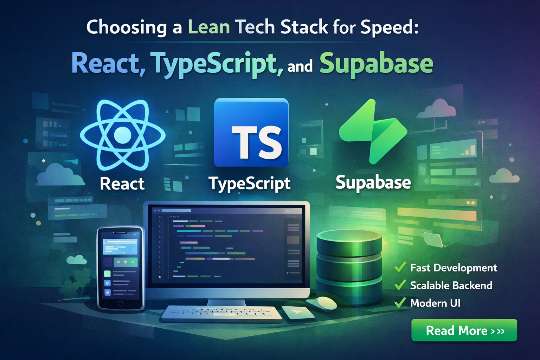
When building your Minimum Viable Product (MVP), prioritize velocity.
Using React and TypeScript ensures type safety, reducing long-term technical debt.
Incorporating Supabase allows you to manage backend infrastructure, database management, and API Routes without reinventing the wheel.
Secure, scalable OAuth flows are non-negotiable from day one, ensuring your infrastructure is ready for professional standards.
Supabase is an open-source Backend-as-a-Service (BaaS) platform designed to replace traditional backend development (like building custom Node.js, Python, or Ruby servers) by giving you a ready-to-use cloud infrastructure out of the box.
It is famously known as the open-source alternative to Google’s Firebase. However, while Firebase uses a NoSQL document database, Supabase is built entirely on PostgreSQL—giving you the raw power, flexibility, and relational structure of standard SQL.
🛠️ The Core Architecture: What’s Inside?
When you spin up a Supabase project, you get a suite of integrated services managed through a single browser dashboard or local CLI:
                     ┌──────────────────────────────────────┐
                     │          Your Client App             │
                     │   (React, Next.js, Flutter, etc.)    │
                     └──────────────────┬───────────────────┘
                                        │ (SDK Calls / WebSockets)
                                        ▼
 ┌─────────────────────────────────────────────────────────────────────────────┐
 │                            SUPABASE BACKEND                                 │
 │                                                                             │
 │  ┌─────────────────┐   ┌─────────────────┐   ┌───────────────────────────┐  │
 │  │    Auto-APIs    │   │      Auth       │   │          Storage          │  │
 │  │ (PostgREST/GraphQL) │ (GoTrue / JWTs)  │   │  (S3-Compatible Buckets)  │  │
 │  └────────┬────────┘   └────────┬────────┘   └─────────────┬─────────────┘  │
 │           │                     │                          │                │
 │           └─────────────────────┼──────────────────────────┘                │
 │                                 ▼                                           │
 │            ┌──────────────────────────────────────────┐                     │
 │            │           PostgreSQL Database            │                     │
 │            │   (Row-Level Security / SQL / pgvector)  │                     │
 │            └────────────────────┬─────────────────────┘                     │
 │                                 │                                           │
 │  ┌──────────────────────────────┴────────────────────────────────────────┐  │
 │  │ Edge Functions (Deno Runtime)  |  Realtime Engine (WebSockets/PubSub) │  │
 │  └───────────────────────────────────────────────────────────────────────┘  │
 └─────────────────────────────────────────────────────────────────────────────┘
The Minimum Viable Product (MVP) vs. The Minimum Lovable Product
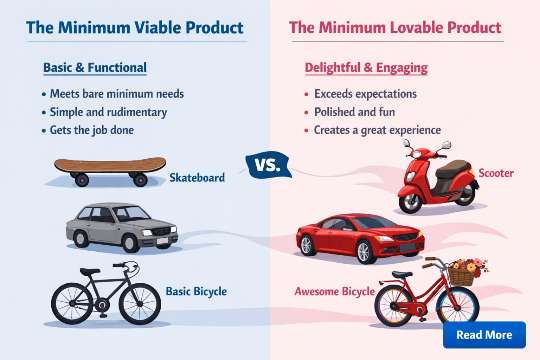
Your MVP should focus on solving one core problem exceptionally well. Avoid the feature creep that kills startups.
A “Minimum Lovable Product” creates an experience that makes users feel relieved to have found you.
When designing, look for UI inspiration from high-performing consumer software to ensure your interface is intuitive, even if your backend is purely B2B.
Securing the First 10 Customers: The Art of Founder-Led Sales

In the early days, you are the sales team. Do not rely on passive marketing. Use direct outreach to secure your first ten customers.
These individuals are your most valuable assets; their user feedback loops will dictate your product roadmap for the next two years.
Identifying Your Product-Market Fit (PMF) Signals
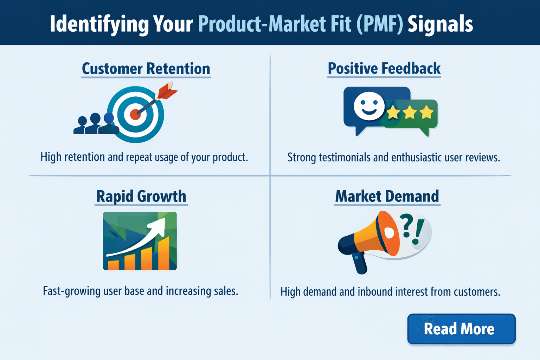
PMF is a shift in data, not a feeling. Your signals include a shortening sales cycle, a decrease in customer acquisition costs (CAC), and users organically recommending your product.
When your growth becomes predictable, you have achieved the foundation necessary for scaling.
Developing a Repeatable Go-To-Market (GTM) Strategy
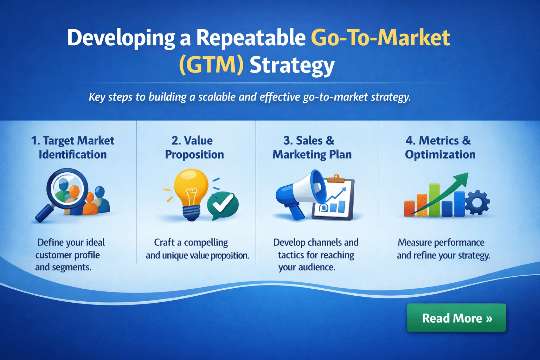
A GTM strategy must be repeatable. If you acquire customers through random networking, you do not have a channel.
Choose one, such as cold outreach or content marketing, and master it before diversifying.
Outbound Marketing vs. Inbound Content: Choosing Your Primary Channel
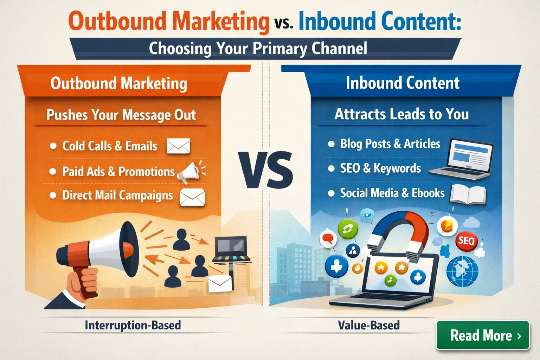
Outbound works faster for B2B, while inbound builds long-term authority. If you need cash flow immediately, lead with outbound marketing.
If you are playing a long-term game, invest in educational content that establishes your brand.
Leveraging AI Tools to Automate Lead Generation and Outreach
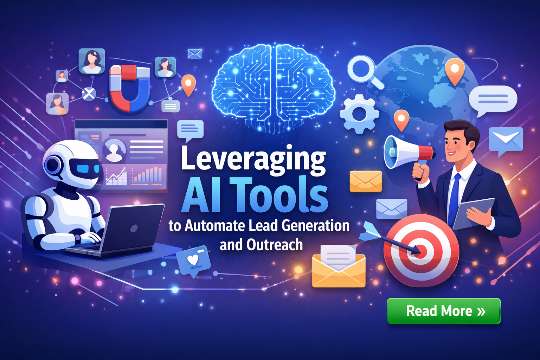
Modern AI tools act as force multipliers. Use them to scrape lead lists, personalize outreach sequences, and analyze prospect intent.
By automating these tasks, you free up time to focus on high-touch closing and strategic growth.
The Importance of Social Proof: Case Studies and Early Adopter Testimonials

The Importance of Social Proof is clear: prospects trust the real-world results of peers more than vendor promises. Case studies and early adopter testimonials show tangible outcomes, reducing uncertainty and speeding decisions.
Strong case studies highlight the problem, your solution, and measurable results — KPIs, ROI, time-to-value, and before/after metrics. Include timeline, implementation details, and team roles to prove repeatability.
Early adopter testimonials work best when they feature credible titles, named companies, and direct quotes. Video clips, logos, and third-party reviews add authority and context.
Address common objections upfront — integration effort, onboarding time, support quality, and security or compliance. This transforms social proof into practical risk mitigation.
Distribute proof everywhere: website, sales decks, demos, proposals, webinars, and social channels. The result is faster deal velocity, higher win rates, and greater buyer confidence driven by the Importance of Social Proof.
The Growth Ceiling: Why Manual Processes Fail at Scale
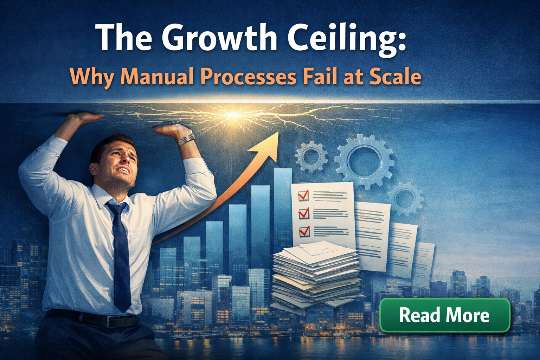
At $100k ARR, manual spreadsheets feel efficient because transaction volume is low and a single owner can reconcile changes quickly.
By $500k ARR, version conflicts, stale data, and human handoffs turn into invoice delays, missed proration, tax errors, and mounting Days Sales Outstanding.
Manual onboarding slows time-to-value: approvals get stuck in email, provisioning is inconsistent, and customers encounter avoidable friction that drives churn.
Finance and RevOps lose visibility as data silos grow; reporting lags, revenue recognition becomes error-prone, and audit/SOC 2 requirements strain ad hoc workflows.
Headcount scales linearly with volume, inflating CAC payback and diverting talent to low-leverage tasks — classic signs you’ve hit the Growth Ceiling.
The Growth Ceiling forms when processes can’t keep pace with bookings, renewals, usage metering, and dunning, capping throughput regardless of demand.
Breaking through requires systems that automate onboarding and billing: role-based workflows, approval gates, usage tracking, proration, tax/VAT, retries, and dunning built-in.
Integrate via APIs and webhooks with your CRM, product, and payment gateways to ensure real-time data, auditability, and scalability without adding manual steps.
Optimizing Pricing and Packaging: The Impact of ARPA (Average Revenue Per Account)
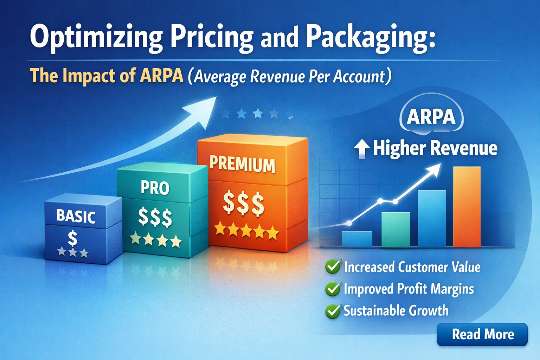
ARPA (Average Revenue Per Account) is the primary growth lever because every dollar increase compounds across your entire customer base.
Raising ARPA gets you to $1M faster by needing fewer customers, improving LTV, and creating more budget for acquisition.
Optimizing Pricing and Packaging means charging for outcomes and impact, not just a checklist of features.
Tie pricing to measurable value drivers — time saved, revenue generated, seats used, or usage thresholds.
A modest 15–30% increase on a Pro tier, paired with clearer value messaging, often delivers an immediate revenue lift without hurting conversion.
Refine packaging to nudge upgrades: introduce usage-based add-ons, premium support, and outcome-focused bundles.
Use price testing, value-based interviews, and competitive benchmarks, and anchor Pro against a higher-priced Enterprise tier.
Communicate changes transparently, grandfather existing customers when possible, and track ARPA, conversion, churn, and expansion to continuously refine Optimizing Pricing and Packaging.
Implementing the “Innovation Flywheel”: Turning User Feedback into Features
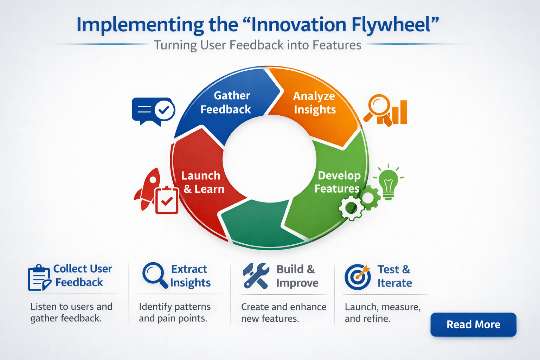
Create structured intake for feedback across support, in‑app prompts, sales calls, and reviews, using a shared taxonomy for feature area, persona, segment, severity, and revenue impact in your CRM or product board.
Normalize and de‑duplicate items, quantify demand (count, ARR affected, NPS deltas, churn risk), attach verbatims for context, and respect privacy controls.
Prioritize with RICE/ICE or Kano, link items to OKRs, assign DRIs and timelines, and define success metrics and experiment plans before build.
Implementing the “Innovation Flywheel” means shipping small, frequent increments mapped to feedback themes, then measuring adoption, retention lift, and expansion rate, and feeding learnings back into the backlog.
Close the loop with customers via roadmap updates, changelogs, and targeted follow‑ups to validate that shipped features solved the original jobs.
Instrument the product to attribute outcomes to features with cohort retention, PQLs, and upsell conversion dashboards by segment.
Run monthly triage and quarterly strategy reviews to align the roadmap with market signals, supported by ongoing discovery interviews and win/loss analysis.
Transitioning from Spreadsheets to CRM: Integrating HubSpot or Salesforce
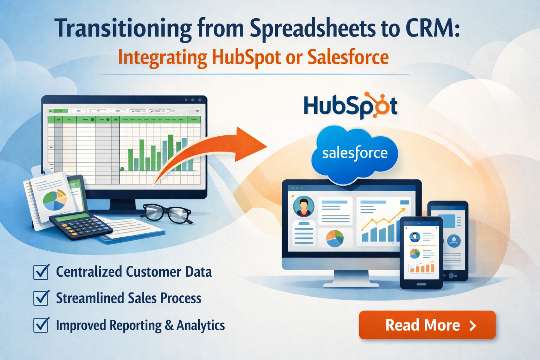
Integrating HubSpot or Salesforce is essential because you can’t scale what you can’t measure, and Transitioning from Spreadsheets to CRM is the first real step. These platforms centralize your data, standardize processes, and create a single source of truth for the entire revenue team.
You’ll get customizable pipelines, lifecycle stages, and lead scoring to qualify and route prospects with precision. Custom objects and fields capture product usage, contracts, or renewals that spreadsheets can’t reliably handle.
Real-time dashboards track conversion rates, funnel velocity, retention, and churn cohorts at every stage. Advanced attribution and forecasting surface which campaigns and reps actually drive revenue.
Native integrations connect email, calendars, forms, chat, product analytics, and billing, keeping records automatically up to date. Automation handles SLAs, follow-ups, and playbooks so reps spend time selling, not entering data.
Plan the migration: audit fields, clean duplicates, map schemas, and run a pilot before full cutover. Invest in role-based training and governance to maintain data hygiene and ensure adoption.
Combating Churn: Building Proactive Customer Support Systems
Combating Churn starts with building proactive customer support systems.
Churn is the silent killer; if customers leave faster than you acquire them, $1M ARR stays out of reach.
Instrument product telemetry to track feature usage, session frequency, time-to-value, and onboarding progress, then define health scores with clear thresholds.
Set alerts for drops in engagement, stalled onboarding, rising support friction, or negative NPS/CSAT, and route risk accounts to owners within strict SLAs.
Create playbooks: personalized check-ins, in-app nudges, targeted help-center articles, quick Loom walkthroughs, and office hours to resolve blockers before cancellation.
Segment by persona and lifecycle stage to tailor outreach, and automate sequences via email, chat, and in-product messaging while reserving human follow-up for high-ARR accounts.
Run renewal-risk reviews weekly, log root causes in a churn taxonomy, and feed insights to product and pricing to eliminate systemic issues.
Measure impact with retention cohorts, expansion revenue, time-to-resolution, and save rate so the team continuously improves at Combating Churn.
Building the “A-Team”: Transitioning from Builder to CEO

Transitioning from builder to CEO means writing less code and architecting the business instead. Your primary job shifts to vision, strategy, and setting measurable priorities (OKRs, KPIs) that align the entire team.
Focus on Building the “A-Team”. Raise the hiring bar, define clear role scorecards, and recruit domain experts in product, engineering, GTM, and ops so you can delegate outcomes — not tasks.
Design the org for clarity: who owns what, how decisions get made, and how information flows. Establish operating rhythms — weekly exec syncs, monthly metrics reviews, and customer-feedback loops — so the machine runs without you in every detail.
Invest in culture as a system: values in action, high-velocity feedback, 1:1s, and performance coaching. Set standards, model them visibly, and remove people or processes that slow execution.
Your leverage becomes capital allocation, talent density, and focus. Step back from shipping features to shipping strategy, processes, and leaders who ship features.
Scaling Distribution: Account-Based Marketing (ABM) and Influencer Partnerships
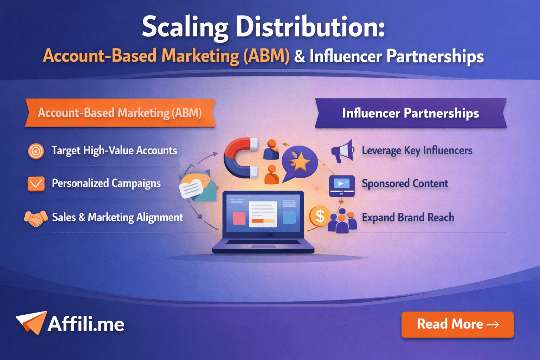
Account-Based Marketing (ABM) focuses resources on a defined list of high-value accounts, using intent data, firmographics, and buying committee insights to craft highly personalized messaging and offers. Align sales and marketing to coordinate outreach across email, LinkedIn, direct mail, events, and tailored landing pages that mirror each account’s priorities.
Influencer partnerships amplify this precision by tapping trusted industry voices — analysts, creators, niche community leaders — to validate your narrative and reach decision-makers where they learn. Co-create assets like webinars, benchmark reports, playbooks, and case studies that speak directly to target account pain points and stages in the buying journey.
For Scaling Distribution, syndicate influencer co-branded content across paid social, podcasts, newsletters, partner marketplaces, and ABM ad platforms, with retargeting that maps to persona and intent. Use allowlisting and creator whitelisting to extend reach while preserving brand safety and message control.
Measure sourced and influenced pipeline, account engagement lift, meeting rates, deal velocity, and CAC payback. Iterate with A/B tests on creative, offers, and channels, and maintain clear contracting, disclosure, and compliance for all influencer activities.
The Unit Economics of a Million-Dollar SaaS: LTV, CAC, and Payback Periods
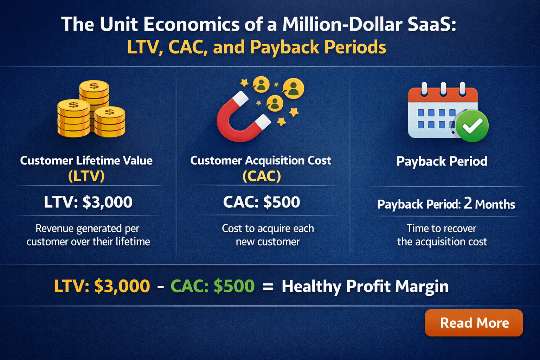
At this stage, you must master your metrics. A sustainable business has a Lifetime Value (LTV) at least three times its CAC.
If your payback period is too long, you are burning capital that you need for growth.
Using AI as an Operational Accelerator: Reducing Overhead with Automation

Using AI as an Operational Accelerator reduces overhead by automating repetitive, rules-based tasks and augmenting complex decisions. Move beyond lead generation to streamline core back-office and customer-facing workflows.
In finance, automate data ingestion, reconciliations, variance analysis, and close checklists with RPA and ML, then generate draft management reports and anomaly alerts. Use forecasting models for cash flow, demand, and spend, and trigger proactive approvals or budget controls when thresholds are breached.
For support, auto-triage tickets by intent, priority, and sentiment; surface similar cases; draft suggested replies; and power self-service with AI search and chat. Monitor SLAs, detect emerging issues, and route to the right teams to cut resolution time and escalations.
Integrate automations with your ERP, CRM, and data warehouse, keep humans-in-the-loop for exceptions, and track KPIs like cycle time, cost per transaction, and first-contact resolution. The goal is to maximize efficiency so headcount costs scale slower than revenue growth.
Preparing for Enterprise: Security, OAuth Flows, and API Infrastructure

Preparing for Enterprise means proving you can protect data, identities, and uptime at scale. As you close larger deals, buyers will require documented controls, audits, and predictable operations.
Harden security fundamentals: SOC 2 Type II or ISO 27001, encryption in transit (TLS 1.2+) and at rest, strong key management and rotation, least-privilege access, tenant isolation, and immutable audit logging. Back this with regular pen tests, vulnerability management, and incident response runbooks.
Secure OAuth end to end: adopt OAuth 2.1/OIDC, use PKCE for public clients and confidential clients with strong secrets or mTLS, and enforce narrow scopes and least privilege. Prefer short-lived access tokens (JWT), rotate refresh tokens, enable revocation, and support enterprise SSO (SAML/OIDC) and SCIM provisioning/deprovisioning.
Build resilient API infrastructure: rate limiting, quotas, idempotency keys, retry/backoff, and circuit breakers. Add WAF/DDoS protection, request signing for webhooks, versioning with backward compatibility, zero-downtime deploys, SLAs/SLOs, and deep observability (metrics, logs, traces).
Meet enterprise compliance and networking needs: data residency, GDPR/CCPA (and HIPAA if applicable), private connectivity (VPC peering/PrivateLink), disaster recovery with clear RPO/RTO, and formal change management. These capabilities are the graduation fee for enterprise-grade revenue.
The Mental Pivot: Managing People vs. Managing Code
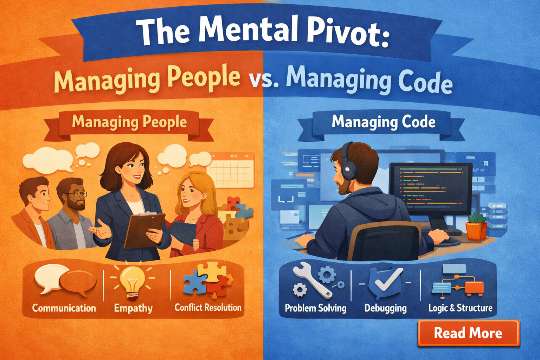
Managing People vs. Managing Code starts with The Mental Pivot.
The final shift is psychological: your leverage moves from keystrokes to coordination. You trade individual brilliance for organizational throughput.
You are no longer judged by clever commits, but by team velocity, reliability metrics, and the health of your systems. Think hiring quality, retention, SLAs, incident rates, and roadmap predictability.
Your job becomes setting clarity: define outcomes, priorities, and constraints. Build feedback loops with 1:1s, reviews, and dashboards that surface risks early.
Delegation is the fulcrum of The Mental Pivot. Assign ownership, not tasks; give guardrails, not step-by-steps; inspect with clear cadences, not ad hoc pings.
Founders who won’t delegate become the bottleneck. Founders who do create leaders, resilient processes, and compounding execution.
That’s how teams scale beyond heroics — and how companies push past $1M ARR.
Conclusion

Scaling from $0 to $1M ARR is not about building more features; it is about building better systems.
In the early stages, your directive is to find a “hair-on-fire” problem, validate it with a Minimum Viable Product, and secure your first paying customers.
As you grow, the focus shifts to creating a repeatable Go-To-Market strategy and leveraging AI tools to maintain operational efficiency.
By the time you approach the $500k milestone, your focus must transition to operational maturity—integrating CRMs, managing churn, and refining your unit economics.
The journey culminates in a shift from the “hacker” mindset to the “CEO” mindset, where you lead people rather than manage code.
Whether you are building in the medium sector or niche vertical, the path to $1M ARR is paved with discipline, rigorous feedback loops, and an obsession with scalable, profitable growth.
Your next step is to audit your current stack and processes; if they don’t serve your $1M goal, it is time to optimize, automate, or delegate.
