
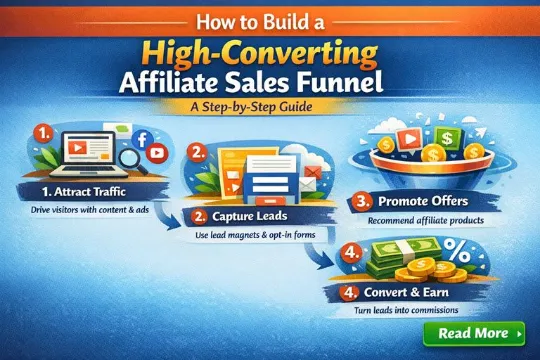
In the modern landscape of affiliate marketing, the difference between a struggling hobbyist and a high-earning professional often comes down to a single decision: the choice between direct-linking and funnel building.
If you are sending paid or organic traffic directly to an affiliate offer, you are effectively setting money on fire.
You lose the lead the moment they click away, and you have no mechanism to re-engage them.
Building an affiliate sales funnel is not just a tactical recommendation—it is a business imperative that transforms you from a temporary promoter into an owner of a valuable marketing asset.
Why a Funnel is the Ultimate Competitive Advantage in Affiliate Marketing
Moving Beyond Direct-Linking: Why Most Affiliates Fail

Most beginners fail because they treat affiliate marketing as a transactional numbers game rather than a customer relationship business.
When you direct-link, you provide no value beyond the link itself.
If the visitor doesn’t purchase immediately, they are gone forever.
In contrast, a robust affiliate sales funnel allows you to capture contact information, nurture the prospect, and sell them multiple offers over time.
This approach mitigates the volatility of traffic costs and ensures you are building an email list—a true business asset that you own and control.
Understanding the AIDA Model in the Context of Affiliate Sales
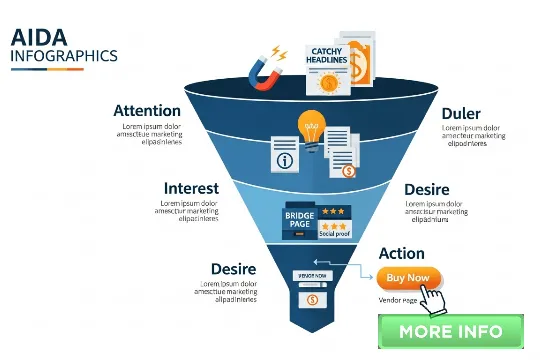
The AIDA model serves as the backbone of every successful affiliate sales funnel.
First, you capture Attention through compelling headlines and high-value lead magnets.
Second, you build Interest by providing insights that address your audience’s specific needs.
Third, you cultivate Desire on your bridge page through social proof and authority building.
Finally, you prompt Action by guiding the user toward the vendor’s sales page.
By mapping every step of your funnel to this psychological progression, you significantly increase your conversion rates.
Shifting the Mindset: Building a Business Asset vs.
Promoting a Link
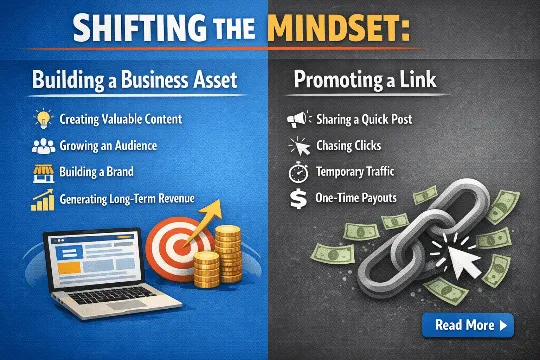
Stop viewing yourself as an advertiser and start viewing yourself as a curator.
When you build a funnel, you are creating a digital environment where you control the messaging, the branding, and the sequence of interactions.
This shifts your role from a passive link-sharer to a trusted advisor.
By owning the data, you insulate your business from platform algorithm changes and ensure that every click has the potential to generate long-term value through follow-up email marketing.
Phase 1: The Strategic Foundation—Niche and Offer Selection
Identifying a Profitable Niche with Long-Term Growth Potential
A profitable niche exists at the intersection of passion, audience need, and market demand.
Avoid oversaturated markets where the cost per lead exceeds your profit margin.
Instead, look for sub-niches—specific segments within larger industries—where you can establish genuine authority.
Long-term growth comes from solving persistent problems for a specific target audience rather than chasing trends.
Choosing the Right Affiliate Program: ClickBank, ShareASale, and Digistore24
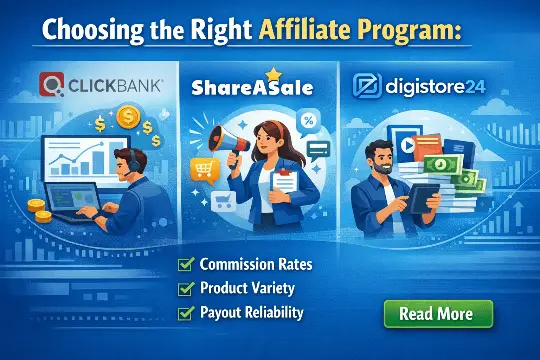
When evaluating an affiliate program, consider commission structures, cookie duration, and vendor reputation.
Platforms like ClickBank and Digistore24 are excellent for digital products, offering high commissions, while ShareASale excels in physical goods and software.
The best program is one where the product genuinely solves a pain point for your audience, ensuring that your recommendation feels helpful rather than intrusive.
Analyzing the Vendor’s Sales Page and Marketing Material
Before you promote a product, audit the vendor’s sales page.
Is the conversion rate clear? Does it feature strong social proof? A high-converting affiliate sales funnel relies on a smooth transition from your page to the vendor’s.
If their sales page is messy or untrustworthy, no amount of bridge page optimization will save your conversions.
Partner only with vendors who demonstrate high standards in their own marketing material.
Defining Your Target Audience’s Pain Points and Desires
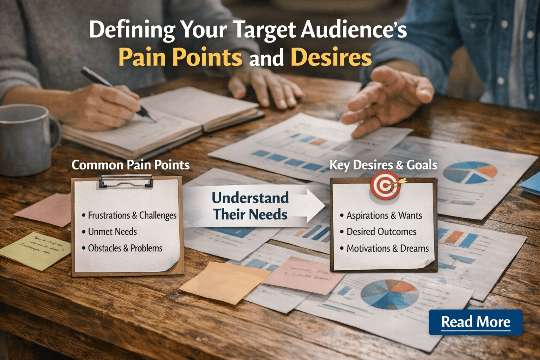
You must understand your audience better than they understand themselves.
What are their nightly anxieties? What are their ultimate goals? When your marketing copy speaks directly to these deep-seated emotions, your conversion rates will naturally improve.
A well-defined target audience allows you to tailor your lead magnet and email sequences to provide relevant, high-value solutions.
Phase 2: Capturing Leads with a High-Converting Opt-In Page
The Lead Magnet: Creating Value That Demands an Email Address

Your lead magnet is the “bribe” that convinces a visitor to join your email list.
It must be specific, immediately useful, and high-quality.
Whether it is a checklist, a mini-video course, or a template, the lead magnet should solve one small problem instantly.
The goal is to provide enough value that the prospect feels compelled to share their contact information in exchange for your expertise.
Essential Elements of a High-Converting Landing Page
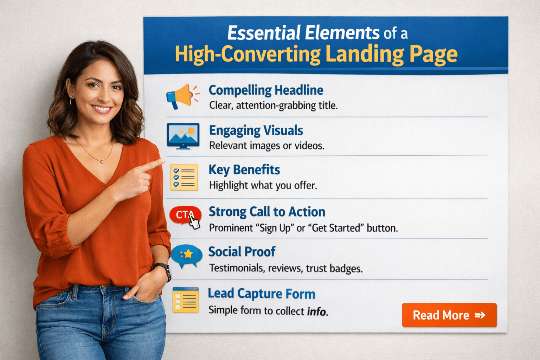
A high-converting landing page is minimalist and focused.
It needs a benefit-driven headline, a sub-headline that clarifies the offer, a clear call-to-action (CTA), and a minimal number of form fields.
Remove navigation bars and external links that could distract the visitor.
Your only goal on this page is to capture the email address—nothing more, nothing less.
Best Practices for Design: Opt-In Forms and Mobile Responsiveness

In an era where most traffic is mobile, your landing pages must be lightning-fast and perfectly responsive.
Test your pages on multiple devices to ensure the form is accessible and the copy is legible.
A cluttered design or a form that breaks on mobile will cause your bounce rates to skyrocket, effectively wasting your advertising spend.
Choosing Your Tech Stack: Landing Page Builder Software and Email Platforms
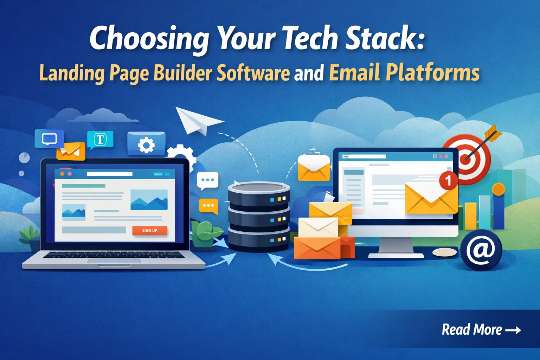
Select tools that integrate seamlessly.
Whether you use platforms like ClickFunnels, Leadpages, or WordPress-based solutions, ensure your landing page builder talks to your email marketing software.
This automated pipeline is the foundation of your funnel.
Invest in reliable platforms that offer advanced tracking, as this data will become your most valuable resource for optimization.
Phase 3: The Bridge Page Strategy—The Secret to High Conversions
Why the Bridge Page is Your Most Important Funnel Asset
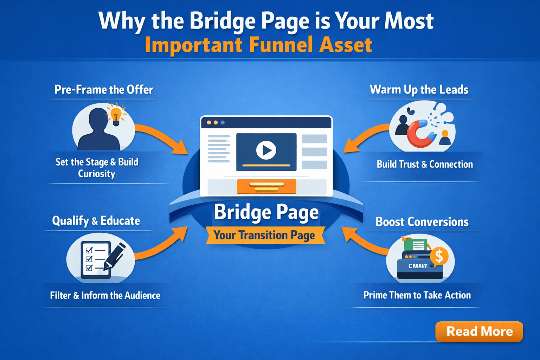
The bridge page sits between your landing page and the affiliate offer.
It serves as your primary opportunity to “pre-sell” the prospect.
Direct-linking fails because there is a trust gap; the bridge page closes this gap.
By personally endorsing the product and explaining why it is the perfect solution for the prospect’s current situation, you warm up the traffic, leading to much higher conversion rates once they finally reach the vendor’s site.
Building Authority and Trust Before the Click
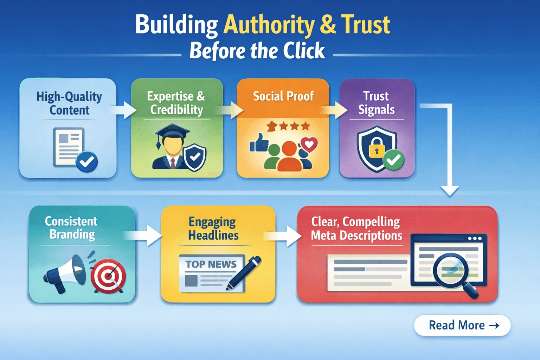
On your bridge page, be transparent about your relationship with the vendor.
Explain that you have personally tested the product or that you have curated it specifically for their needs.
When you share your own experiences, you establish an emotional connection that builds trust.
Trust is the currency of the digital age, and it is the single most important factor in converting a lead into a customer.
Leveraging Social Proof and Personal Testimonials
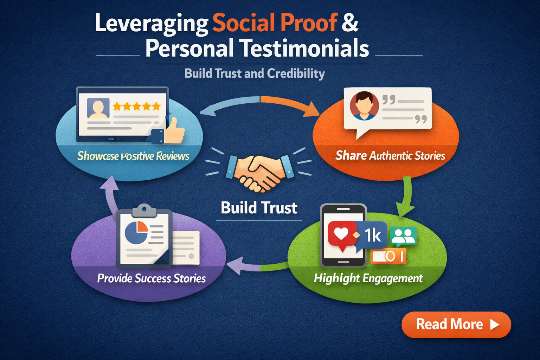
Use your bridge page to highlight social proof, such as user testimonials, case studies, or your own results.
If you don’t have your own data yet, use vendor-provided case studies that highlight concrete outcomes.
Seeing that others have succeeded with the product reduces the perceived risk for the prospect, making them much more likely to click through and eventually complete the purchase.
The “Bonus Stack”: Using Exclusive Bonuses to Outcompete Other Affiliates
One of the most effective strategies to dominate a market is the “Bonus Stack.
” Offer custom resources—such as a proprietary strategy guide, a custom template, or a one-on-one consultation—that are only available to those who buy through your link.
This turns a commodity product into a unique offer, providing the competitive edge necessary to outshine other affiliates promoting the same program.
Crafting a Powerful Call-to-Action (CTA) to the Vendor’s Page
Your CTA should be an instruction, not a request.
Use strong, action-oriented language that highlights the benefit.
Instead of “Click here,” use phrases like “Start My Transformation Now” or “Get Instant Access to Your Bonus Bundle.
” Make the button stand out visually and ensure the messaging on the button matches the promise you made throughout your bridge page.
Phase 4: Building the Automated Email Nurture Engine
Setting Up Your Email Marketing Platform for Automation
Automation is the engine of your affiliate marketing business.
Once a lead is captured, your email software should trigger a sequence that continues the conversation without manual input.
Ensure your email platform supports tagging and segmentation so you can track which users are interested in which products, allowing for highly targeted follow-up campaigns.
The 5-Day “Indoctrination” Sequence Template
A standard 5-day sequence should focus on relationship building rather than constant pitching.
Day 1: Deliver the lead magnet and set expectations.
Day 2: Share a personal story related to the problem.
Day 3: Provide value-driven tips that address the pain point.
Day 4: Introduce the affiliate offer as the ultimate solution.
Day 5: Address objections and provide a final push with social proof.
Balancing Value-Driven Content with Promotional Affiliate Links
The “80/20 rule” is crucial here: provide 80% educational, value-driven content and 20% promotional messaging.
If your emails are purely promotional, your subscribers will tune you out or unsubscribe.
By consistently providing value, you earn the right to ask for the sale.
Your affiliate link should feel like a natural, helpful extension of the advice you are providing in each email.
Back-End Sales: Promoting Subscription Memberships and High-Ticket Offers
The true profit often lies in the back-end.
Once you have a customer who trusts you, introduce them to higher-ticket products or recurring subscription memberships that offer ongoing value.
Because you have already built a relationship, the conversion rates for these high-ticket offers will be significantly higher than if you had tried to sell them to a cold lead on the front end.
Phase 5: Driving Targeted Traffic to Your Funnel
Organic Traffic Strategies: Leveraging SEO, YouTube, and Content Marketing
Organic traffic is the foundation of a sustainable business.
By creating content that ranks on Google or performs well on YouTube, you attract high-intent leads who are already searching for the solutions you offer.
Focus on long-tail keywords that signal high buying intent.
This evergreen traffic acts as a stable source of leads that you can continue to monetize through your funnel over the long term.
Paid Traffic Mastery: Scaling with Google Ads and Social Media Marketing
Paid traffic allows you to scale your business quickly once you have a proven, high-converting funnel.
Start with small budgets and focus on tracking your conversion rates and return on ad spend (ROAS).
Use retargeting campaigns to capture those who visited your landing page but didn’t opt-in.
Scaling should only happen once your funnel is performing consistently and you understand your metrics.
The Role of Retargeting in Recovering “Lost” Leads
Retargeting is the “safety net” of your affiliate sales funnel.
A large portion of your traffic will not purchase on the first visit.
By using pixel-based tracking, you can show targeted ads to those individuals on social media, reminding them of the value you offer.
This keeps your brand top-of-mind and significantly increases your overall conversion rates by giving prospects multiple opportunities to engage.
Conclusion
Building a high-converting affiliate sales funnel is a transition from mere “link-flipping” to the deliberate construction of a digital marketing engine.
By focusing on your target audience’s needs, utilizing a bridge page to establish trust, and automating your nurture process through email marketing, you move beyond the volatility of direct-linking and into the territory of sustainable, scalable income.
Remember that a funnel is not a static project but an evolving organism.
Monitor your metrics closely—from opt-in rates to the click-through rates on your emails—and use this data to iterate.
Every element, from your landing page headline to your bonus stack, is a variable that you can test and improve.
By consistently optimizing these touchpoints, you ensure your business remains resilient against market shifts.
Start by identifying a high-value niche, build your bridge page today, and begin capturing the leads that will form the foundation of your future success.
Your affiliate business is waiting; the architecture is now in your hands.
