

In the current digital landscape, we are besieged by noise.
Attention spans are shrinking, and B2B decisions have become increasingly complex.
The “Marketing Rule of 7,” a long-standing mantra suggesting a prospect needs seven touches before purchasing, is now outdated.
Today, seven quick impressions are not enough to build the depth of connection required to close a sale.
If your conversion rates are stagnating, the problem isn’t your offer; it is the “Trust Deficit.”
Modern buyers are sophisticated researchers.
They don’t just want to see a logo; they want to experience expertise.
To bridge the gap between a stranger and a long-term customer, you need to shift your focus from tracking simple clicks to measuring the hours your audience spends consuming your insights.
Welcome to the 7 Hour Rule: the definitive shift from counting impressions to measuring the time your audience spends with your brand.
Beyond the “Rule of 7”: Why Time is the New Currency of Trust
Why The 7-Hour Rule Transforms Sales Strategy
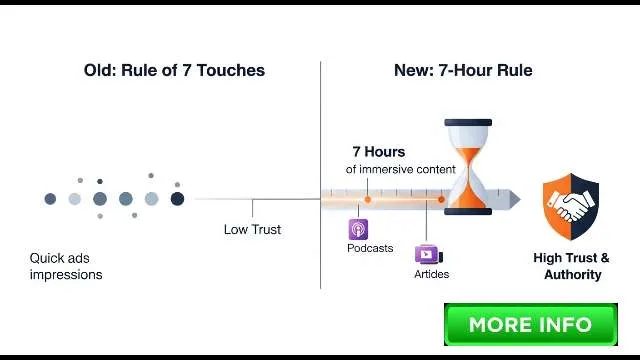
The transition from the archaic “Marketing Rule of 7” to the modern 7 Hour Rule marks a move from transactional awareness to relational authority.
In a crowded marketplace, superficial touchpoints fail to differentiate your value.
By committing to seven hours of high-quality content consumption, you move beyond ad fatigue and establish a foundation of brand loyalty.
This isn’t just about repetition; it is about providing the depth of evidence required for high-stakes decision-making.
The Psychology of the 7-Hour Rule: Insights from Daniel Priestley’s “Oversubscribed”
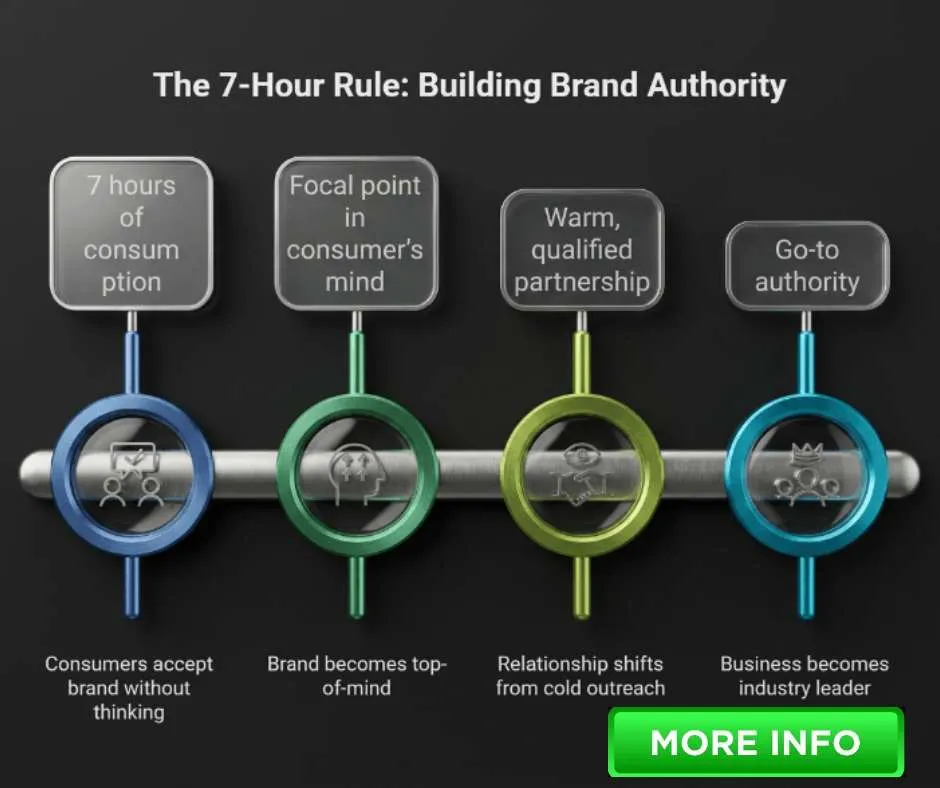
Daniel Priestley’s idea of being “oversubscribed” means that valuable prospects need to know your brand well before they commit.
The 7 Hour Rule creates a “focal point” in the consumer’s mind.
Seven hours lets people accept your brand without thinking.
This changes the relationship from cold outreach to a warm, qualified partnership, turning your business into a go-to authority rather than a vendor.
The Mere Exposure Effect: Why Visibility is Only Half the Battle
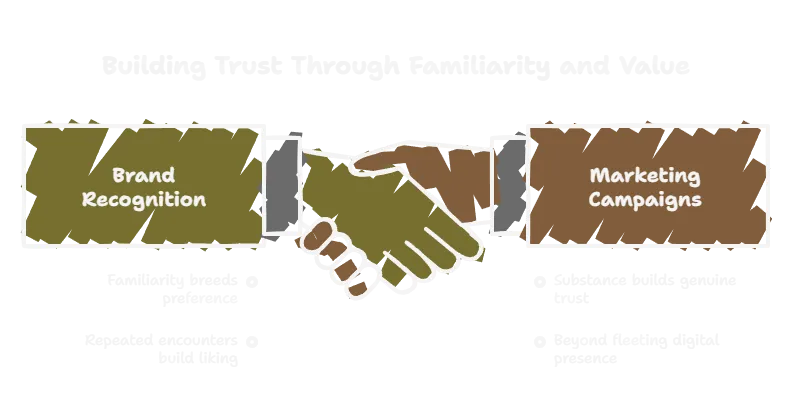
The Mere Exposure Effect posits that people develop preferences for things they are familiar with.
However, visibility without value leads to stagnation.
By providing deep-dive content, you transform simple brand recognition into genuine trust, ensuring that your marketing campaigns are built on substance rather than just fleeting digital visibility.
The Evolution of Consumer Behavior: Why Modern Buyers Require More “Proof”
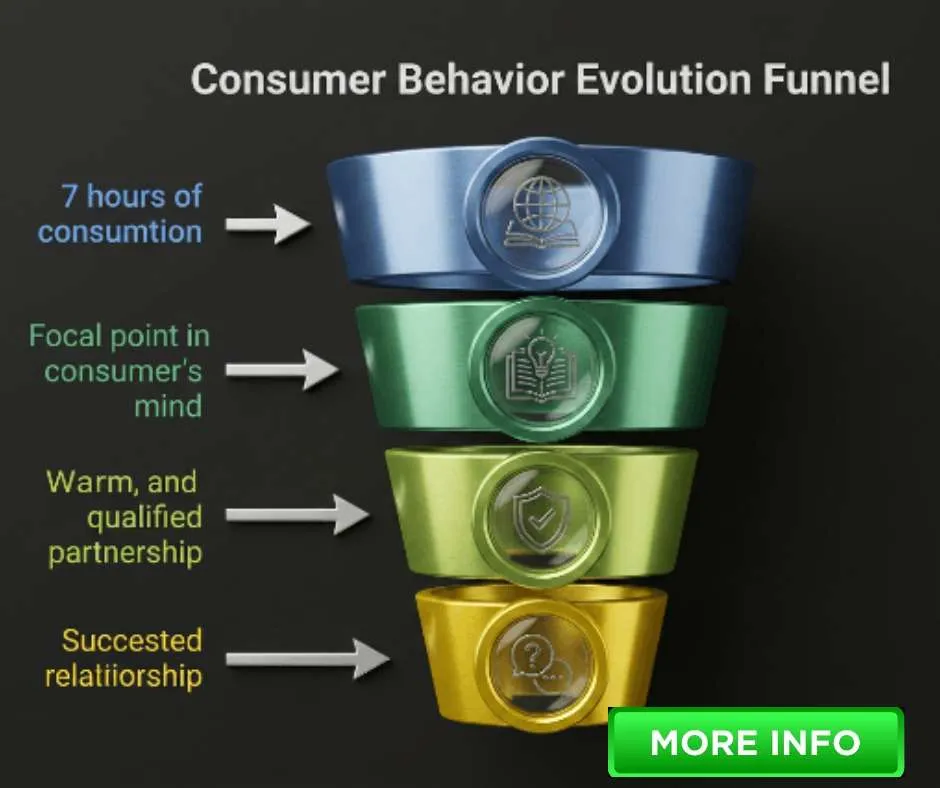
Modern consumer behavior is defined by skepticism.
Buyers perform exhaustive research before reaching out to Sales Development teams.
Your brand must provide deep, educational content to survive this environment.
This content should act as proof of your ability.
It should answer the customer’s questions before they ask them.
This shortens the sales cycle.
7 Hours of Consumption: Building Deep Authority and Trust

True authority is earned through the time spent in your content strategy.
Whether through webinars, podcasts, or whitepapers, accumulating seven hours of interaction shifts a lead through the customer journey effectively.
This depth of engagement is the catalyst for conversion in any sophisticated Sales Funnel.
11 Specific Touchpoints: Staying Top-of-Mind Across the Sales Cycle
To maintain momentum, you must implement the 7-11-4 Rule.
This framework advocates for 7 hours of consumption, 11 specific interactions, and presence across 4 distinct platforms.
These touchpoints—ranging from email replies to case studies—keep your brand top-of-mind.
4 Distinct Locations: Creating a Multi-Channel Brand Presence
You cannot rely on a single silo.
This might include your website for deep research.
Use YouTube for video authority.
Use LinkedIn for networking.
Use an email newsletter for direct, long messages.
This multi-channel marketing approach ensures you are everywhere your ideal client seeks information.
The “Value Density” Deficit: Why 30-Second Clips Aren’t Enough for High-Ticket Sales
Vanity metrics like likes on social media do not translate to revenue.
High-ticket sales require “value density.
” Short clips serve as discovery, but they cannot replace the foundational education provided by long-form content.
Combating Ad Fatigue: Why “Fast Content” is Losing Its Effectiveness
When you rely solely on high-frequency, low-value FB ads, you trigger ad fatigue.
By prioritizing “Slow Content,” you offer an antidote to the noise, allowing your audience to engage on their own terms and build deeper trust.
The Trust Gap: Why Sales-Heavy Copy Fails Without Educational Depth
If your sales copy or sales page focuses exclusively on the “buy now” message, you will fail.
You must earn the right to ask for the sale by providing educational value that proves your worth to the prospect.
“Fast Content” (Social Media & Ads): Capturing Initial Recognition
Use social media as a funnel entry point.
The goal here is immediate recognition and a bridge to your deeper assets, not the final sale.
“Middle Content” (Blogs & Emails): Nurturing Interest and Solving Problems
Middle Content serves to sustain the relationship.
It is where you nurture interest through tailored solutions that speak directly to the prospect’s pain points.
“Slow Content” (YouTube, Podcasts, & Webinars): Bridging the 7-Hour Gap
This is where the 7 hours are truly earned.
Long-form video, podcasts, and webinars provide the “proof” required to move a lead through the sales cycle.
Content Modularity: Turning One Pillar Asset into Hours of Exposure
Content creation should be efficient.
One high-quality pillar asset, such as a webinar, can be broken down into dozens of smaller pieces, maximizing repeated exposure across all channels.
The Power of Repurposing: Maximizing Visibility Across LinkedIn, YouTube, and Newsletters
Repurposing content ensures that your message reaches different segments of your audience in the formats they prefer, scaling your reach without increasing your workload.
Using Content Hubs and Whitepapers to Centralize Information
Content hubs act as the library for your prospects.
By centralizing your resources, you create a seamless path for the user to consume more of your work and deepen their trust in your brand.
Inventorying Your Assets: How Many “Hours” Do You Actually Have?
Take a comprehensive look at your current library.
Find the gaps in your content library.
Then start breaking your existing expertise into smaller parts to see if you have truly met the 7-hour threshold.
Identifying the Leaks: Where Are Prospects Dropping Out of Your Funnel?
Look at your analytics carefully.
If prospects drop off at your sales page, it may be because you have not yet provided the 7 hours of “proof” necessary to justify the purchase.
Measuring Success Beyond Click-Through Rates: Analytics and Time-on-Page
Analytics tools should focus on engagement duration rather than clicks.
Time-on-page is the metric that correlates with revenue.
Creating the Bridge: Moving Users from a Tweet to a Deep-Dive Video
Your content strategy must include clear bridges—calls to action that guide the user from a surface-level tweet to a 60-minute video.
Using Multi-Channel Marketing to Facilitate Repeated Exposure
By coordinating your email, social, and web presence, you create a cohesive environment that keeps your brand present throughout the entire buying journey.
Empowering Sales Closers and Sales Development Teams with Content Assets
Sales Closers and Sales Development teams need your “Slow Content” to overcome objections.
When a prospect is stuck, a strategic piece of content can often do more than a follow-up call.
Tailoring the 7-Hour Rule to Your Business Model
The 7-11-4 Rule is a roadmap, not a strict law.
If your product is a low-cost digital download, you may need fewer than seven hours.
If you sell high-ticket consulting, seven hours may be the minimum.
Assess your market, analyze your customer journey, and scale your content efforts accordingly.
Conclusion
The 7 Hour Rule isn’t just a marketing tactic; it is a fundamental shift in how you view the sales process.
By treating time as your most valuable resource, you stop chasing quick clicks.
Instead, you build deep, trustworthy relationships that last.
When you give seven hours of real value, you do more than shorten the sales cycle.
You build a brand that many people want.
This creates long-term loyalty that your competitors cannot copy.
Start today by auditing your existing assets, identifying the gaps in your educational content, and creating a structured path that leads your prospects through the full 7-hour journey.
When you commit to being the most helpful resource in your industry, you earn the right to lead the market.
