

If you’re an entrepreneur, a creator, or anyone trying to monetize your knowledge online, it is time to face a harsh reality: the traditional rules of creating and selling digital products have completely collapsed.
What worked like a total charm just a couple of years ago is actively hurting your business right now.
We are witnessing a massive shift where creators who made $50,000 one year are seeing their revenue drop to zero the next, despite using the exact same products.
Those old ebooks and copy-pasted templates are undeniably dead. But it’s not because people stopped spending money; it’s because the market has fundamentally changed.
The root cause of this crash can be measured in just 30 seconds, the time it takes to pull a shot of espresso.
That is also exactly how long it takes for a potential customer to open an AI tool, type in a single sentence, and receive a completely personalized, highly superior version of the generic product you’re trying to sell for $97.
The value of basic, generic information has plummeted to zero. If you used to sell a generic 30-day social media plan, a user can now prompt an AI to “create a 30-day content plan for a real estate agent targeting first-time buyers in California,” and get a custom structure in half a minute.
What was once a high-value paid product is now instantly accessible, entirely custom, and completely free. To survive this era, you must evolve alongside your audience.
The Brutal Idea Killer Test: A Three-Step Audit
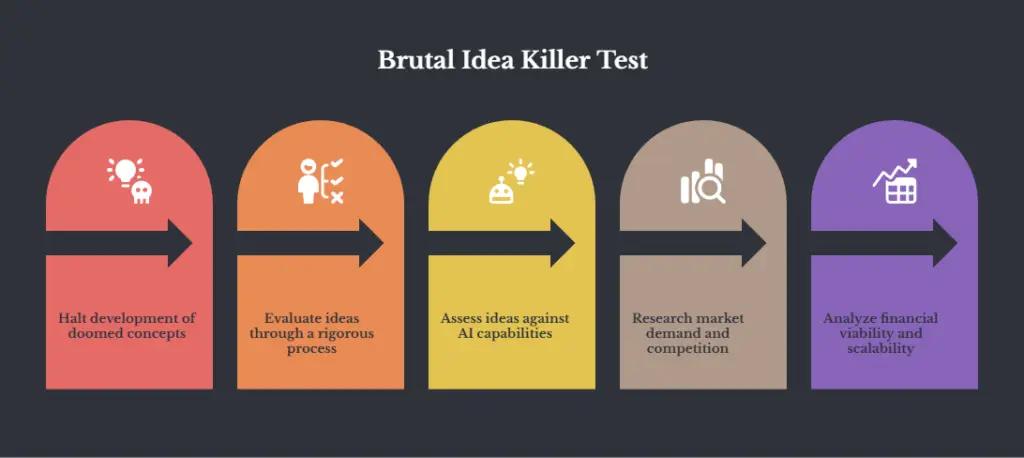
Before you spend another second building a product, you need to stop the bleeding. It is officially time to stop building “dead” products.
To prevent you from wasting months on doomed, commoditized concepts, you must put your next big idea through a ruthless three-step audit.
Step 1: The AI Comparison
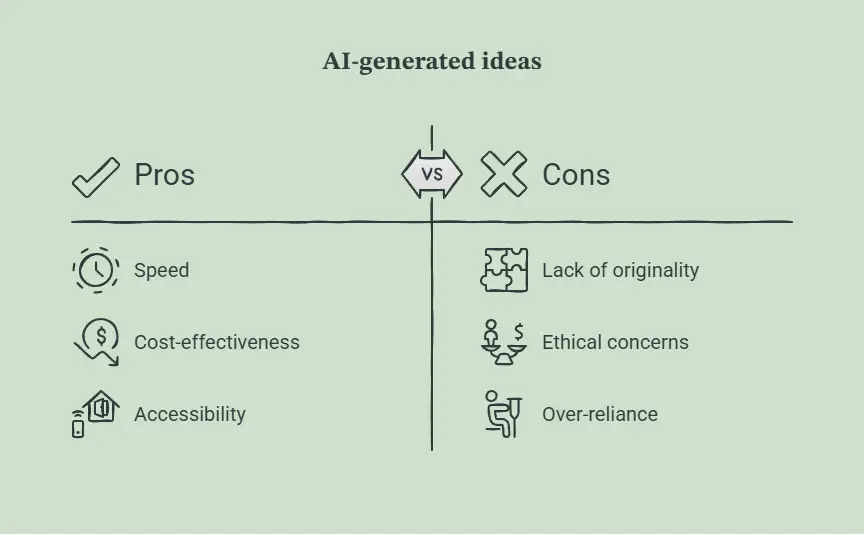
Can an AI tool generate something at least 80% similar to your idea in under a minute?
If a basic prompt can get a user that close to your final result, your product is in the “red zone.” AI has made generic information a commodity, and you cannot compete with “free and instant.”
Step 2: The Canva Search
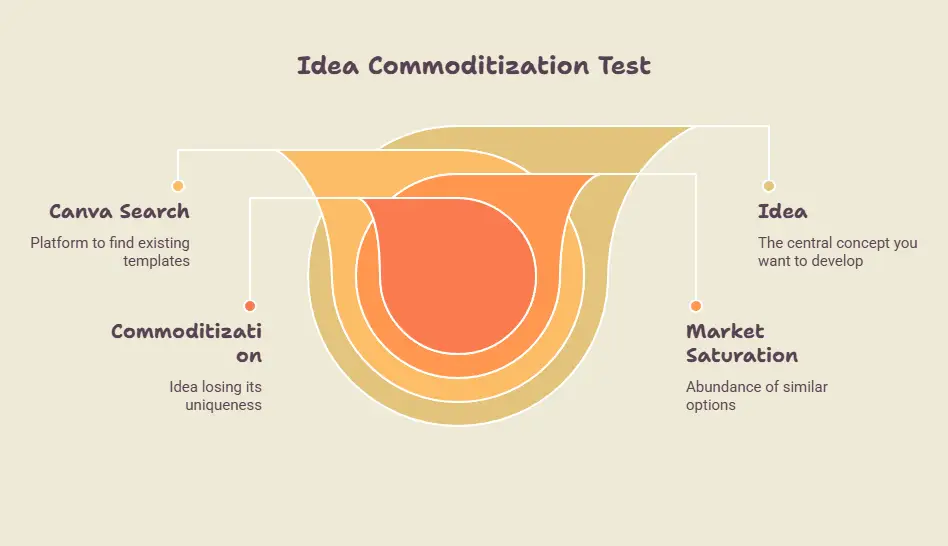
Go to a platform like Canva and search for your exact idea. Are you seeing hundreds of free or low-cost options?
If the market is already flooded with high-quality, free templates, your idea is too commoditized to command a premium price.
Step 3: The Spreadsheet Test
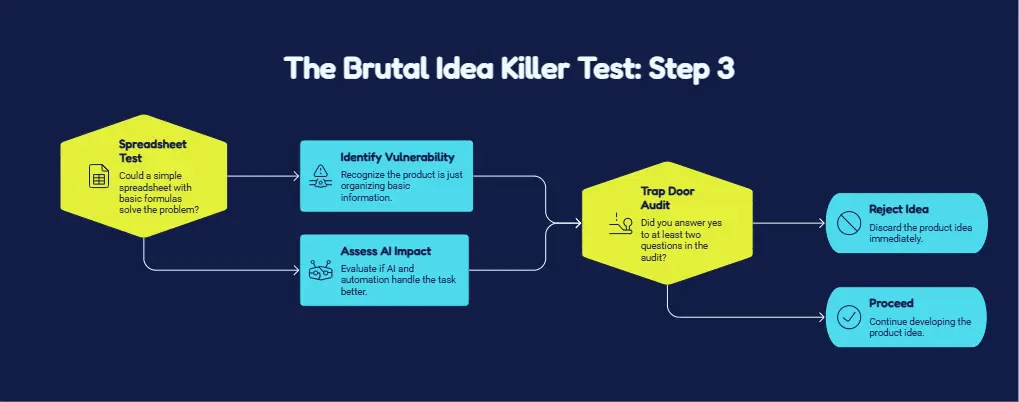
Could a simple spreadsheet with a few basic formulas solve the exact same problem? If your product is essentially just a way to organize basic information, it is incredibly vulnerable to obsolescence.
AI and simple automation tools can now handle organization better and faster than a static PDF ever could.
The Trap Door: If you answered “yes” to at least two of these questions, your product idea is doomed.
There is no amount of flashy marketing or redesigning that can save a heavily commoditized idea from the AI wave.
The quickest way to win in today’s market is to reject your bad ideas faster than your competition does.
The Paradigm Shift: Transformation Over Information
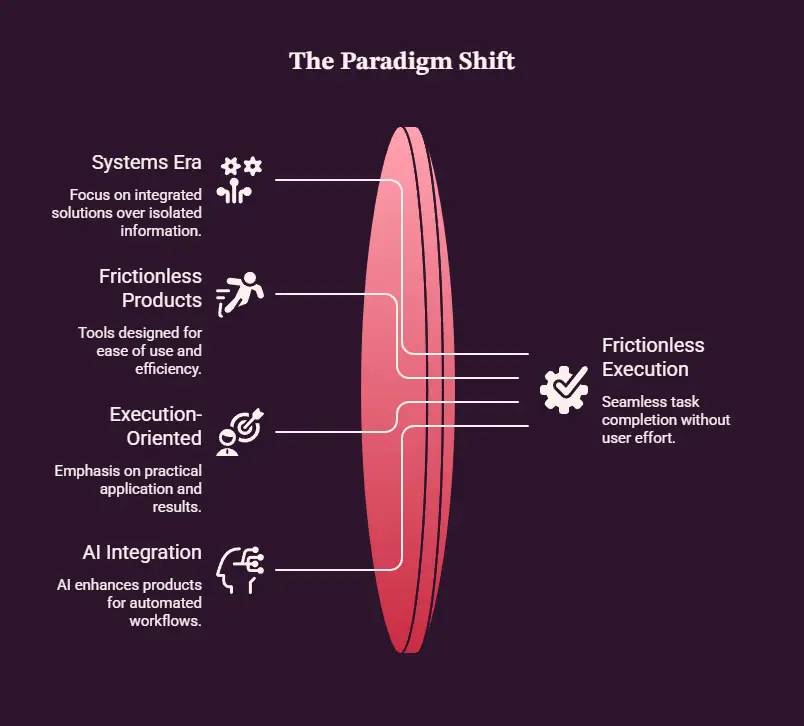
The lazy era of digital products is over, but this opens up an inspiring new playbook for those willing to adapt. We are moving away from the “Information Era” and into the “Systems Era.”
In the old model, everything was based on teaching.
You sold a course or an ebook that said, “Here is how to do it.” The problem? People simply don’t finish complex courses anymore.
They lack the time and energy to learn and implement everything from scratch. The new model is all about frictionless systems.
Instead of saying “Here is how to do it,” your product should say, “This tool helps you do it faster.”
People are no longer paying for education; they are paying for execution. They want “mini-apps” and systems that shoulder the burden and do the heavy lifting for them.
Instead of fighting AI, the smartest creators are layering AI directly into their products, embedding prompts, structured inputs, and automated workflows to deliver pure momentum.
How to Build Frictionless Niche Tools
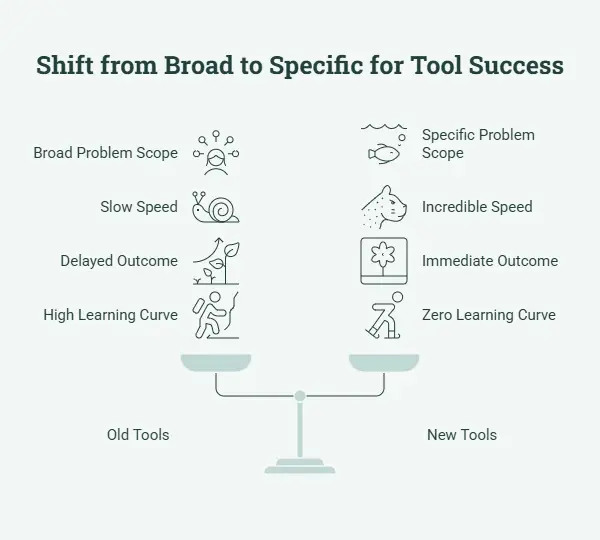
To stand out in a noisy, AI-saturated market, you must zoom in on hyperspecific problems for hyperspecific people.
Broad concepts are failing, but highly targeted, instant-value tools are flying off the digital shelves. Consider these shifts:
- Old: A broad fitness ebook. New: A “Busy Pro Meal Planner” that automatically generates meals based on a tight schedule.
- Old: A general budget spreadsheet. New: A “Debt Payoff Tracker” that shows the exact day you will be debt-free.
- Old: A massive content creation course. New: A “50-Post Idea Generator” to instantly cure blank page syndrome.
These successful tools follow four core patterns that you should apply to your own builds:
- Solve one specific problem: Don’t try to do everything. Fix one pain point perfectly.
- Incredible speed: The tool must be fast to use.
- Clear immediate outcome: The user should see a result the moment they use it.
- Zero learning curve: This is vital. Your buyer should get value instantly without having to watch hours of tutorials.
In the modern economy, you are selling speed. People value their time above all else. When you remove the effort required to get a tangible result, you create a product people are thrilled to pay for.
Avoid the Ultimate Creator Mistake
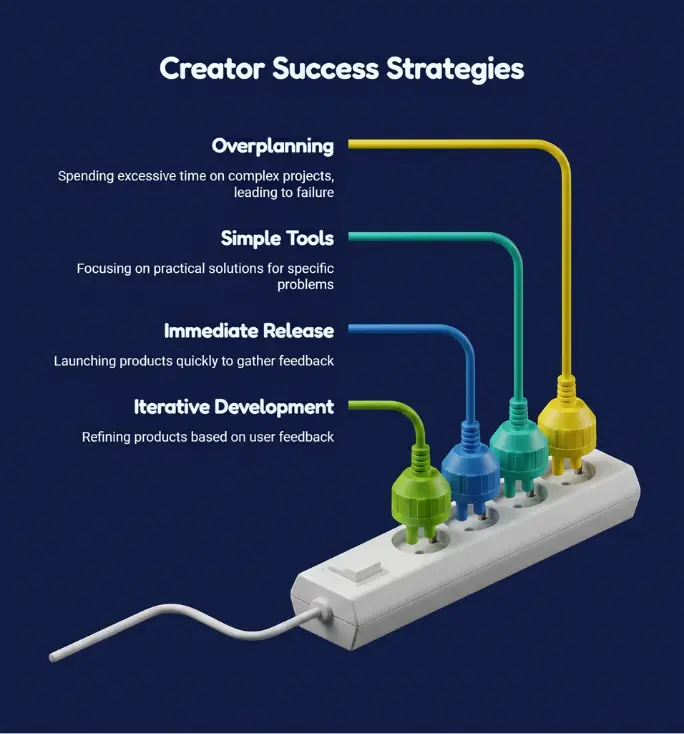
Many creators fail because of their own egos. We often convince ourselves that we need to build something massive, complex, and revolutionary to be successful.
We hide away in our offices for six months, overplanning a “behemoth” product, only to watch it flop upon release.
The market doesn’t want “revolutionary” complexity; it wants simple and useful. The new path to success involves identifying a specific problem, building a simple tool to solve it, and getting it in front of real people immediately.
You must iterate based on real-world feedback rather than striving for a “perfect” launch in total secrecy.
The goal isn’t perfection; it’s usefulness.
Real-World Application: Lead Creator AI
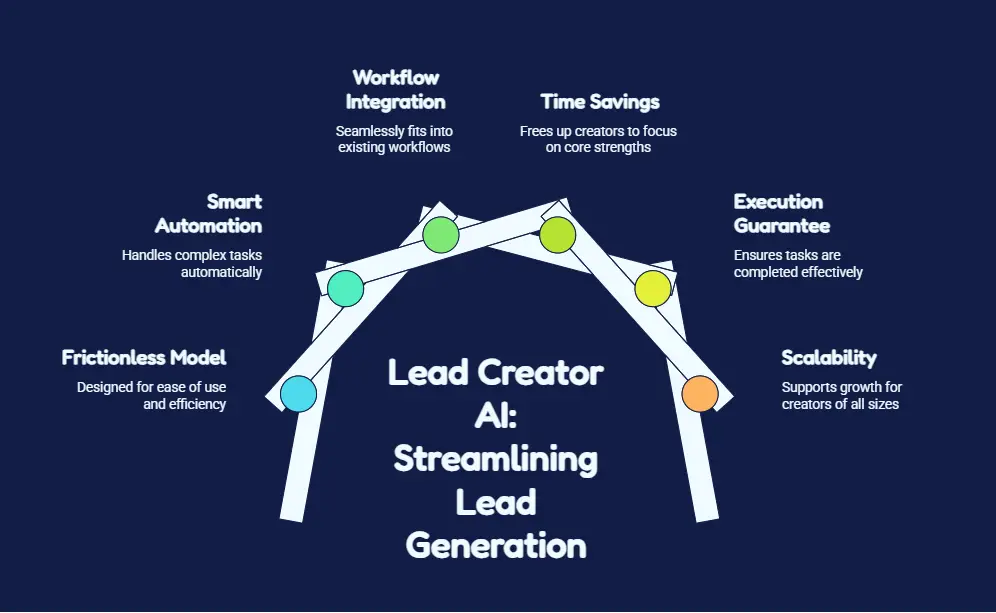
A perfect example of this frictionless model in action is Lead Creator AI. This system is built entirely around removing friction for the user.
Instead of teaching a creator how to find and nurture leads, a complex and time-consuming task, it uses smart automation to handle the heavy lifting.
By integrating directly into a user’s workflow, it saves the creator time and allows them to focus on their core strength: creating products.
It embodies the shift from giving knowledge to providing a system that guarantees execution.
Whether you are looking to scale or are just starting out, tools like this show that the future belongs to those who provide smart automation and customer engagement strategies that work seamlessly.
Key Takeaways for Modern Creators
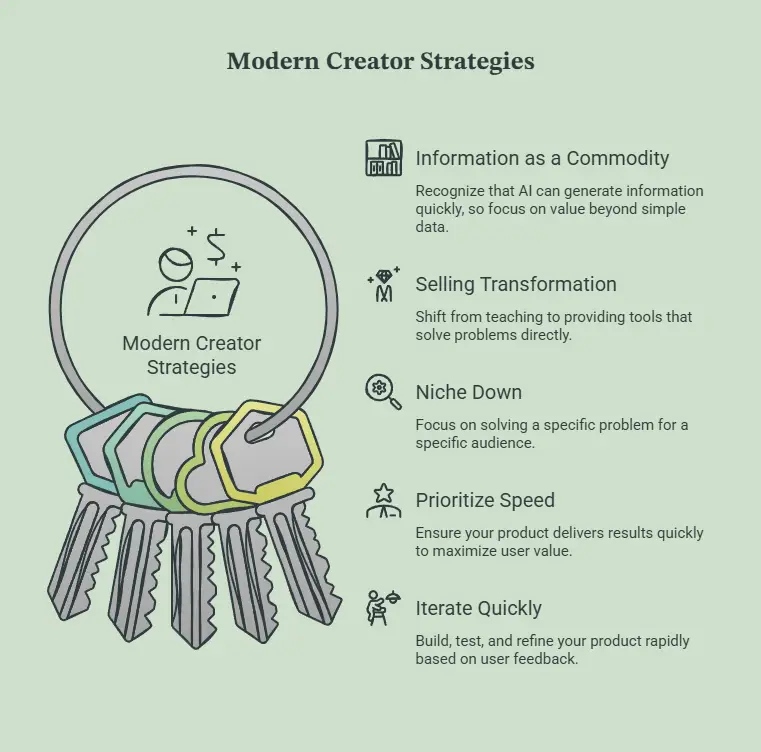
- Information is a commodity: If AI can generate it in 30 seconds, don’t try to sell it.
- Sell Transformation, not Education: Shift your focus from teaching people how to do things to giving them tools that do the work for them.
- Niche down: Solve one specific problem for one specific type of person.
- Prioritize Speed: Your product’s value is directly tied to how quickly it delivers a result to the user.
- Iterate quickly: Stop overplanning. Build a simple tool, test it with real users, and refine it.
Conclusion
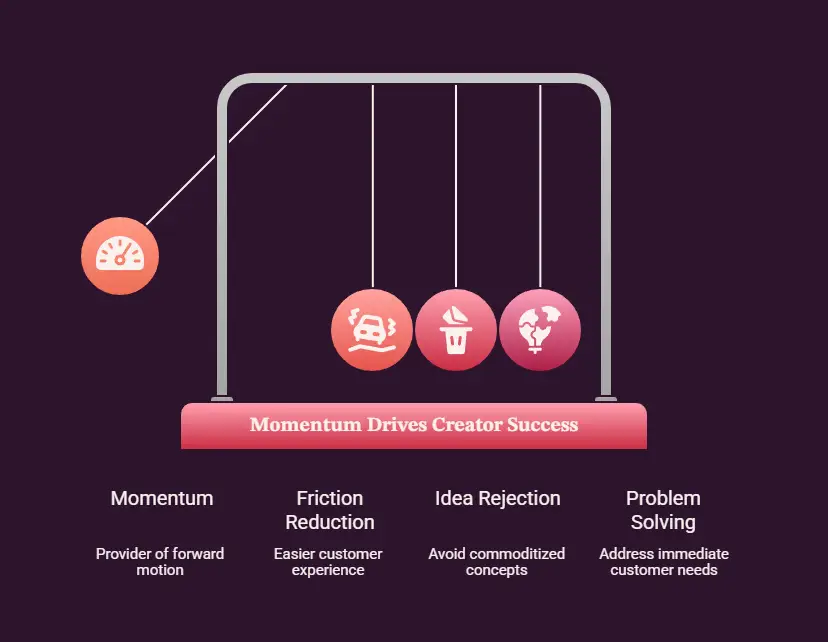
The opportunity for creators has never been bigger, but the barrier to entry has changed.
You can no longer hide behind generic PDFs and long-winded courses. To win in the AI era, you must become a provider of momentum.
As you wrap up today, ask yourself one provocative question: What specific problem will your new tool solve today?
Not next month, not after a year of planning, but today.
Apply the three-step audit, reject the commoditized ideas, and start building something truly useful.
The creators who thrive will be those who remove the most friction for their customers. It’s time to roll up your sleeves and deliver the transformation your audience is looking for.
