

You possess a unique competence that feels like breathing.
It is so ingrained that you likely undervalue it, assuming that because it comes naturally to you, it must be common knowledge.
This is the “Genius Gap”—the psychological and professional distance between the things you do effortlessly and the income you could be generating by teaching them to others.
Whether you are an expert in software engineering, a master of marketing, or someone who understands the nuances of photography, your intuition is a dormant digital asset.
This article explores how to bridge that gap.
We will move past the fluff of typical business advice and utilize the design principles of visionaries like Steve Jobs alongside the mechanical power of modern AI.
By treating your expertise as a product-ready system rather than a vague skill set, you can transform your unconscious competence into a scalable, profitable digital business.

Understanding the Genius Gap: Why Your “Easy” is Someone Else’s “Impossible”
The Frictionless Paradox: Why We Undervalue Our Greatest Skills

The most dangerous trap for any creator is believing that high-value skills must be “hard.
” If you can write code in your sleep, optimize a marketing funnel while distracted, or frame stunning images without conscious thought, you might minimize these talents.
This is the Frictionless Paradox: we assume that if a task lacks friction for us, it lacks value for the market.
In reality, the market pays specifically to remove that friction.
People do not pay for your effort; they pay for the shortcut you provide.
Defining the Genius Gap: The Distance Between Intuition and Income
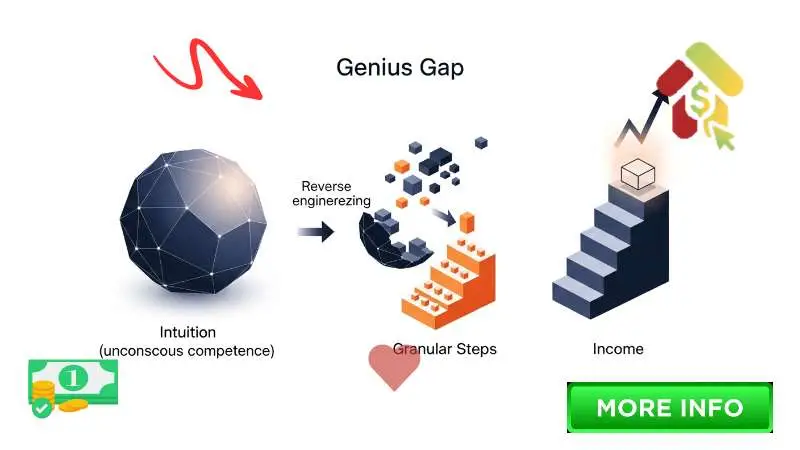
Bridging the Genius Gap requires reverse-engineering your unconscious mastery into actionable, granular steps that beginners can follow.
The Genius Gap exists precisely because your expertise has moved into the realm of intuition.
When you are a master of a craft, you no longer see the steps; you only see the result.
To monetize, you must perform a “reverse engineering” process.
You have to step back from the mastery and identify the granular blocks of knowledge that someone at a lower level of proficiency needs to reach your current state.
The Curse of Knowledge: How “Unconscious Competence” Stalls Product Creation
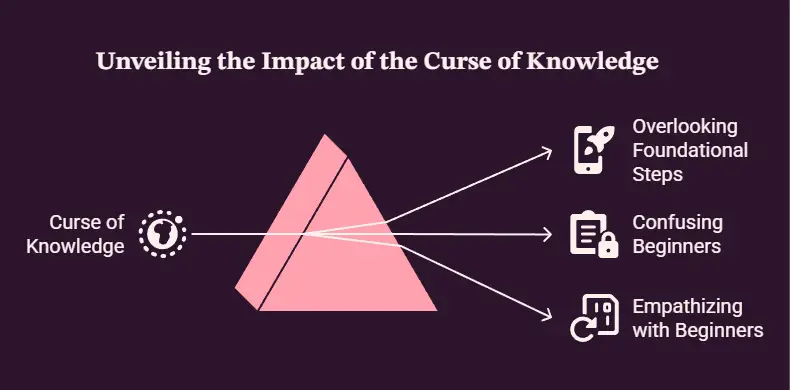
The “Curse of Knowledge” is a cognitive bias that makes it nearly impossible to imagine what it is like not to know what you know.
When you build a start-up or design a product, you naturally overlook the “obvious” foundational steps.
This leads to digital products that are too advanced, confusing beginners who simply want to understand the basics.
To succeed, you must intentionally “un-learn” your expertise to empathize with the beginner.
Identifying Your Effortless Strengths: The Diagnostic Phase
The “Calligraphy” Principle: Lessons from Steve Jobs on Niche Interests
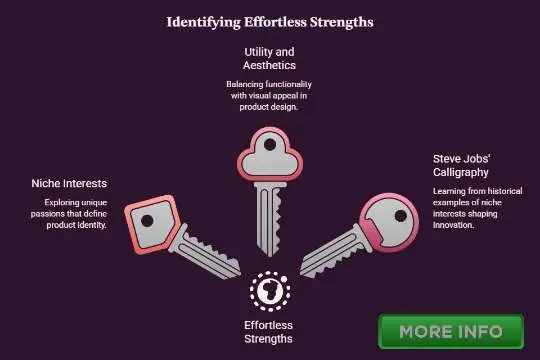
When Steve Jobs famously dropped out of college, he stayed to audit a calligraphy class.
It felt useless at the time, but it later informed the typography of the Macintosh.
The lesson is that your niche interests are rarely accidents; they are the distinct components that will define your product’s “feel.
” Your digital product, like an Apple device, should focus on the intersection of utility and aesthetics.
Reviewing Your “Status Updates”: What Do People Constantly Ask You For?
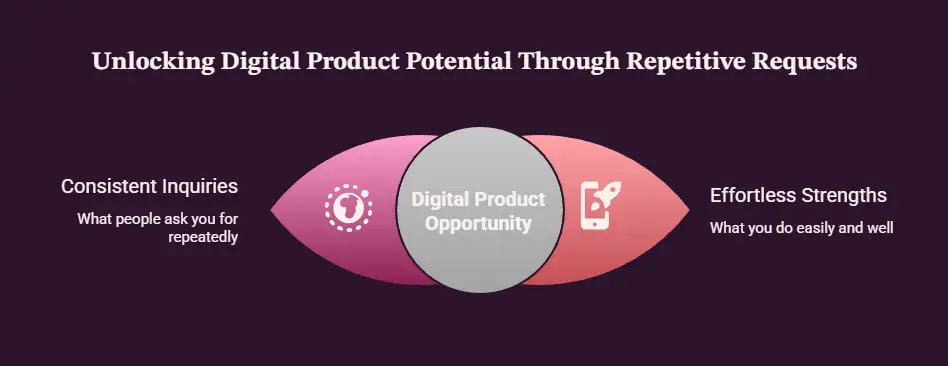
Your “status updates” are the inquiries you receive on Slack, via email, or in casual conversation.
If colleagues consistently ask you to debug their code, optimize their Google ad sets, or explain your photography workflow, that is a signal.
These repetitive requests are not annoyances; they are the curriculum for your first digital product.
The Procrastination Test: What Do You Do When You’re Avoiding “Real” Work?
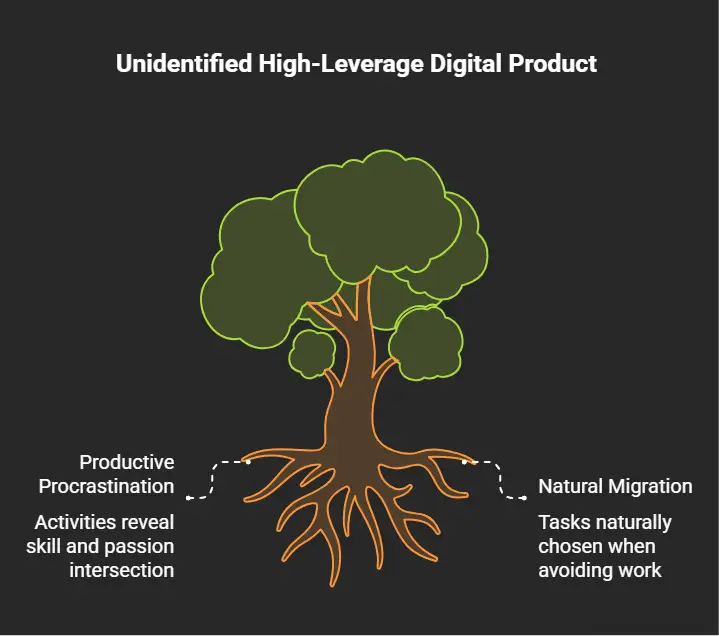
We all have “productive procrastination” habits.
You might find yourself tweaking a website, writing a prompt library, or organizing data when you should be doing something else.
This activity represents the intersection of your skill and your passion.
If you naturally migrate toward these tasks when avoiding “real” work, that is where your highest-leverage digital product resides.
Bridging the Gap: Moving from Intuition to a Marketable Hypothesis
The Logic of Product-Market Fit for Personal Expertise
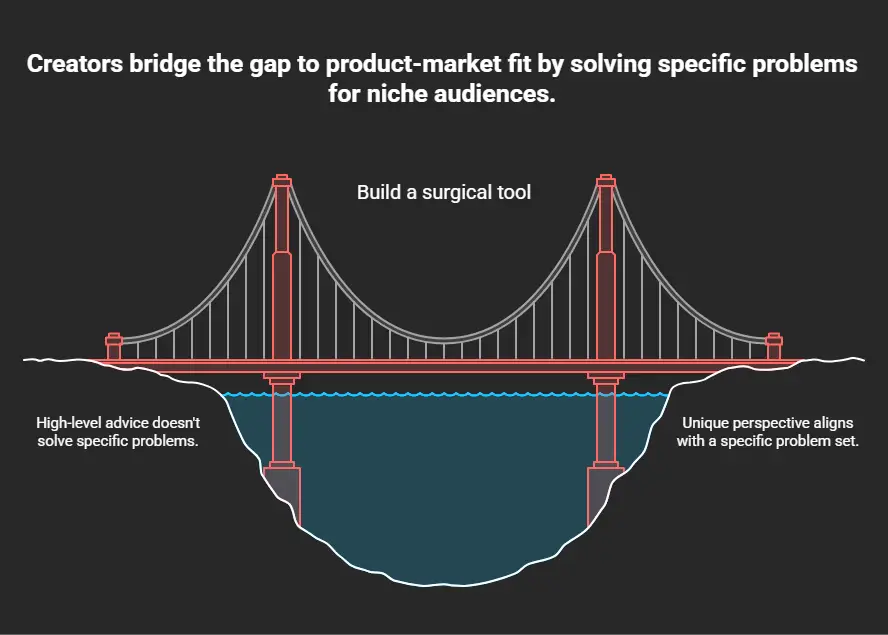
Product-market fit for a creator is simpler than for a giant tech firm.
It is the alignment between your unique perspective and a specific problem set.
Do not try to build a platform for everyone.
Build a surgical tool that solves one specific, painful problem for a niche audience who is tired of generic, high-level advice.
Overcoming “Loss Avoidance” and the Fear of Packaging Your Magic
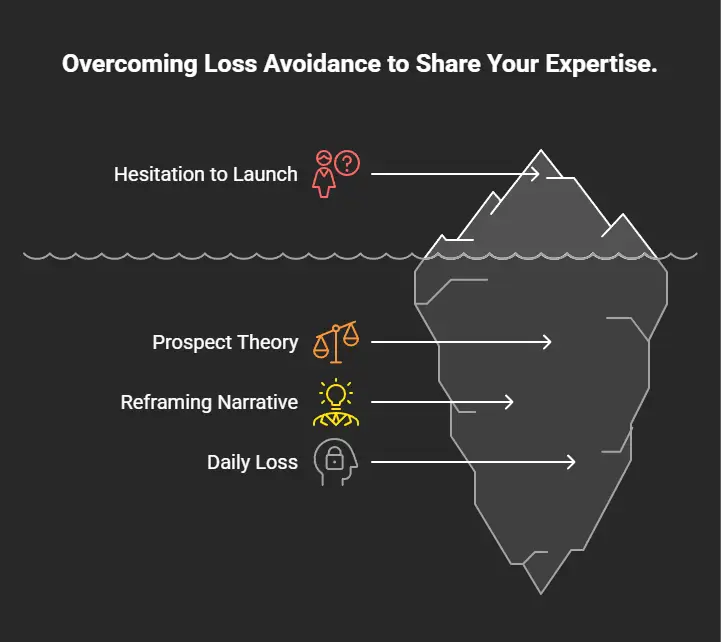
Prospect Theory teaches us that the pain of loss is psychologically twice as potent as the pleasure of gain.
This is why you hesitate to launch a product: you fear the “loss” of your reputation or the rejection of your ideas.
To win, you must reframe the narrative.
You are not “risking” your expertise; you are solving a problem.
Every day you keep your knowledge locked in your head, you are causing a “loss” to the people who need your solution.
Turning a Talent into a System: The First Step Toward Scalability
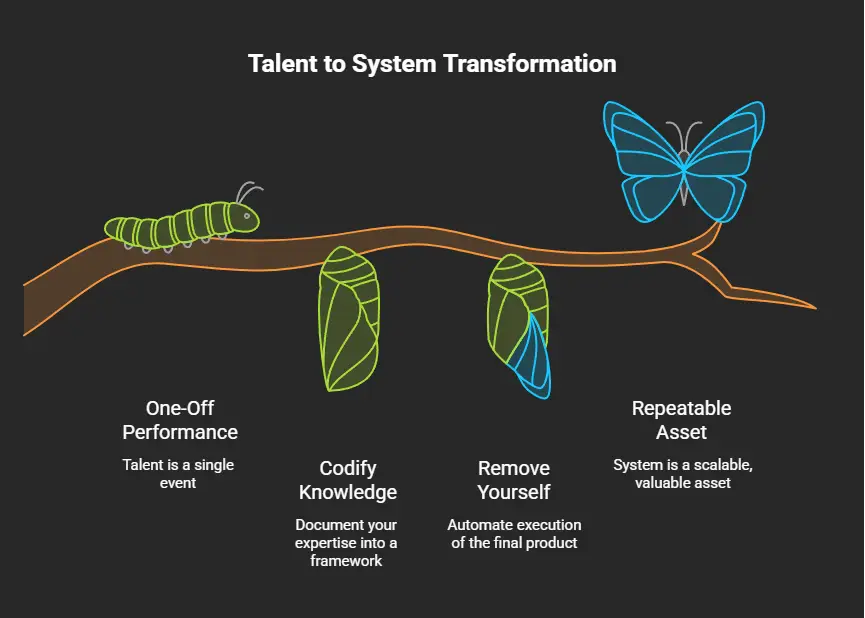
A talent is a one-off performance; a system is an asset.
To scale, you must codify your knowledge into a repeatable framework.
Whether it is a set of video modules, a curated prompt library, or a step-by-step process document, you must remove yourself from the execution of the final product.
The AI Translator: Using Generative AI to Externalize Your Genius
Using ChatGPT and Claude as “Expertise Extractors”
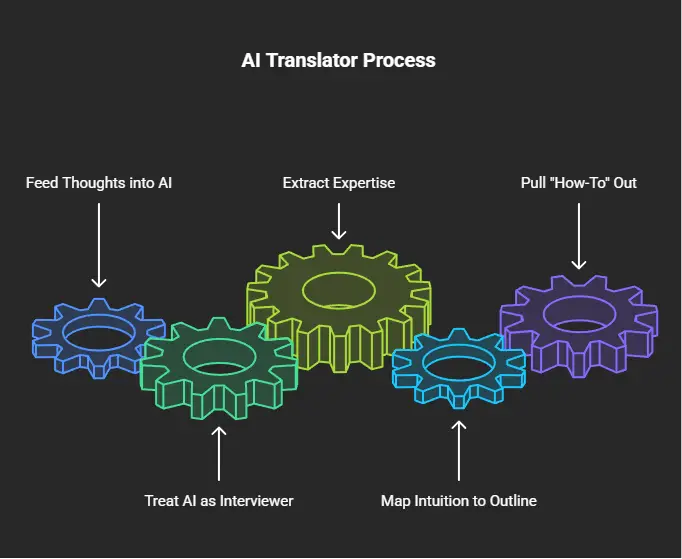
AI is the ultimate tool for overcoming the Curse of Knowledge.
Feed your thoughts, notes, and rough workflows into ChatGPT or Claude.
Treat these tools as intelligent interviewers.
They can take your unstructured, “unconscious” intuition and map it into a structured outline.
This interaction effectively pulls the “how-to” out of your brain.
Prompting Your Way to a Product Outline: How to Interview Yourself
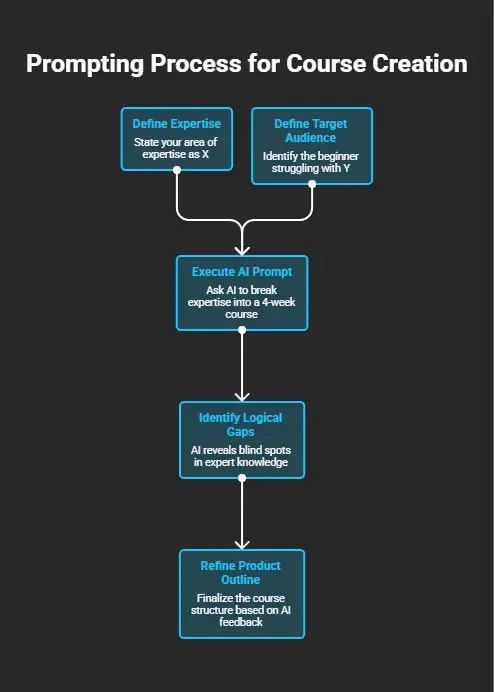
Use specific prompts to externalize your genius.
Ask the AI: “I am an expert in X.
Help me break this down into a 4-week course for a beginner who is struggling with Y.
” The AI can identify the logical gaps that you, as an expert, are blind to.
Leveraging Gemini and Voice Mode for Rapid Content Brainstorming
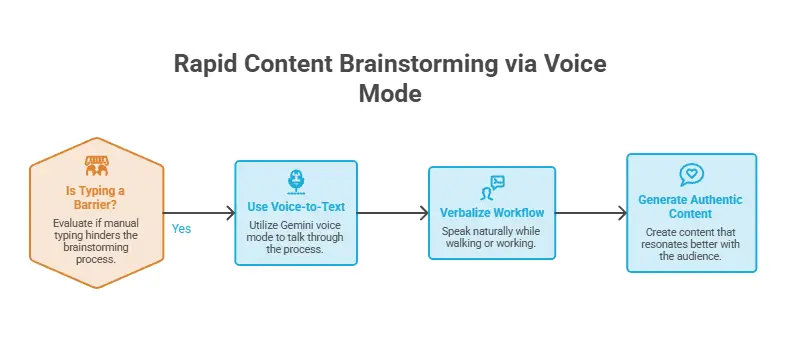
Sometimes, typing is a barrier.
Use voice-to-text tools like Gemini’s voice mode to “talk through” your process while you walk or work.
Verbalizing your workflow often feels more natural and less formal, leading to more authentic explanations that resonate better with your audience.
From Thought to Asset: Structuring Your Digital Product
The “Macintosh” Approach: Creating a Revolutionary User Interface for Your Info
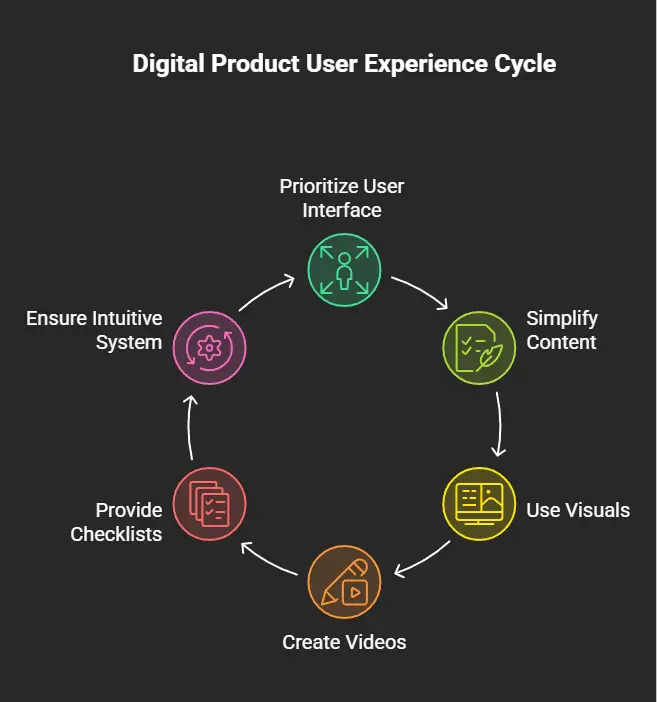
The Mac was successful because it prioritized the user interface.
Your information product should be the same.
Do not overwhelm users with text.
Use clean visuals, simple videos, and actionable checklists.
If you are selling a system, ensure the interface is as clean and intuitive as an iPhone.
Minimum Viable Product (MVP): Why Your First Version Should Have “Bugs”
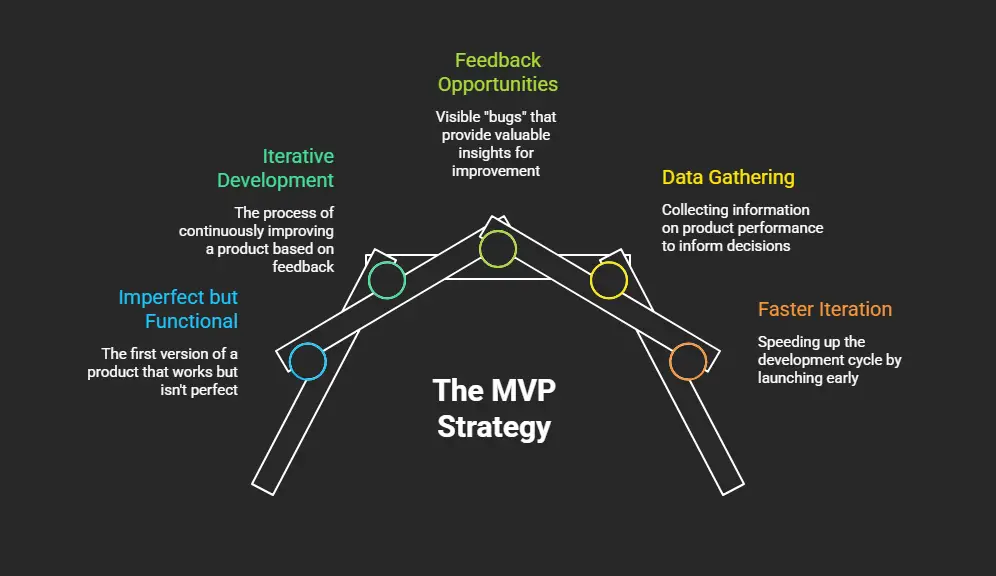
Your first product should be imperfect.
A perfect product is a myth; an iterative product is a reality.
Launch with the “bugs” visible—these are actually feedback opportunities.
A lean MVP allows you to gather data on what is working and what is not, allowing you to iterate faster than if you had spent months in hiding.
Selecting the Right Medium: Video, E-books, or Prompt Libraries
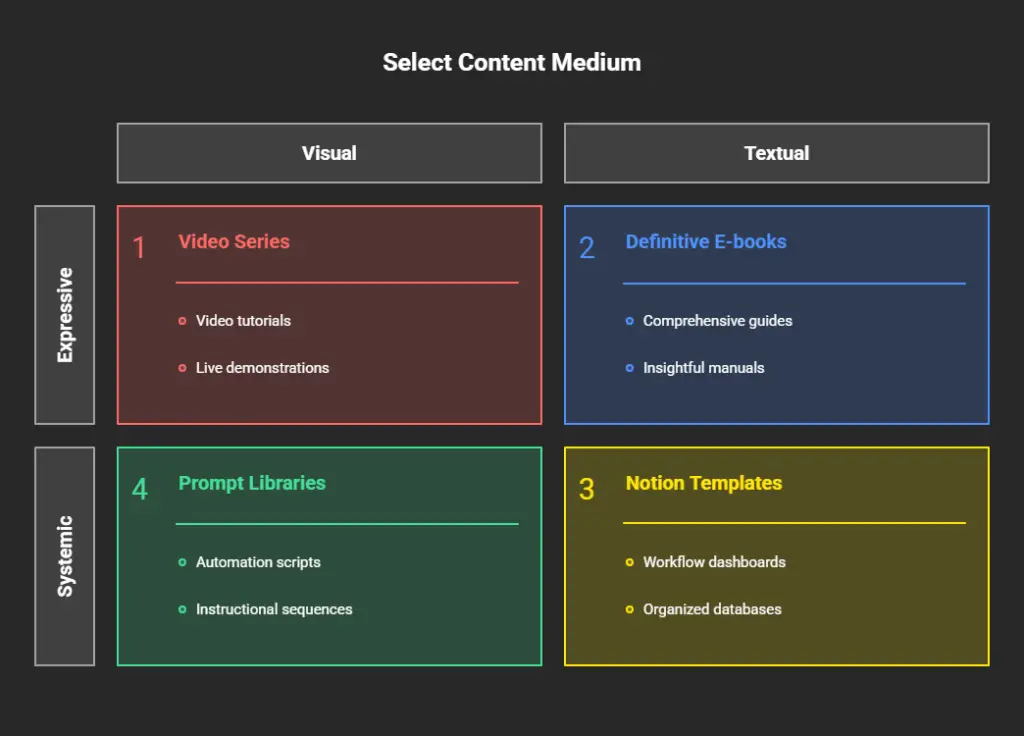
Choose the medium that best matches your genius.
If you are a visual teacher, create a video series.
If you are a systems thinker, build a library of prompts or Notion templates.
If you are a communicator, write the definitive e-book.
The medium is simply a vessel; the value is in the insight.
The “Pixar” Methodology: Refining Your Content Through Feedback
Establishing a Feedback Loop: The Importance of Observability
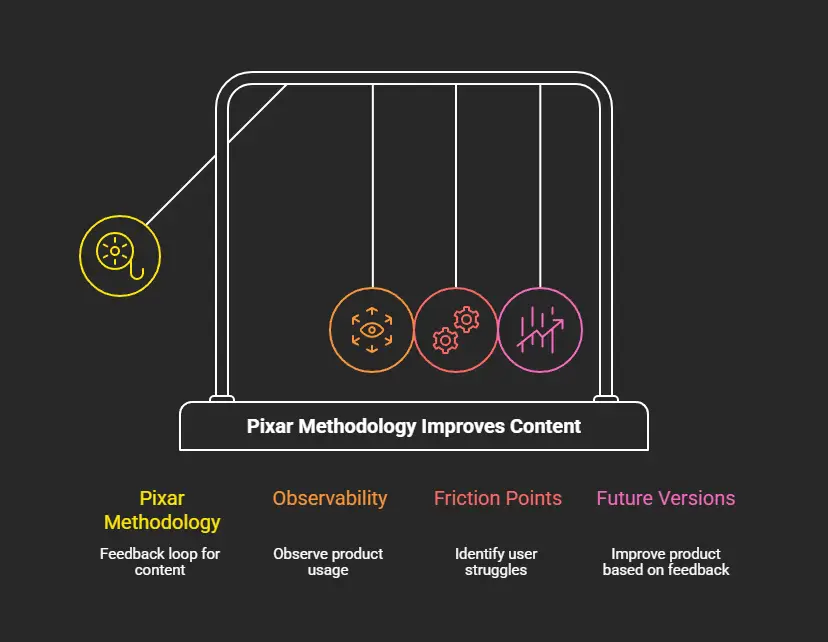
Pixar is famous for its “Braintrust,” where creators review works-in-progress.
You need a similar loop.
Whether it is through a private Slack community or direct outreach to early users, you must observe how people use your product.
Where do they get stuck? Where do they drop off? These moments of friction are your greatest assets for future versions.
Iterative Development: Using “Bugs” and “Blockers” to Improve the User Experience
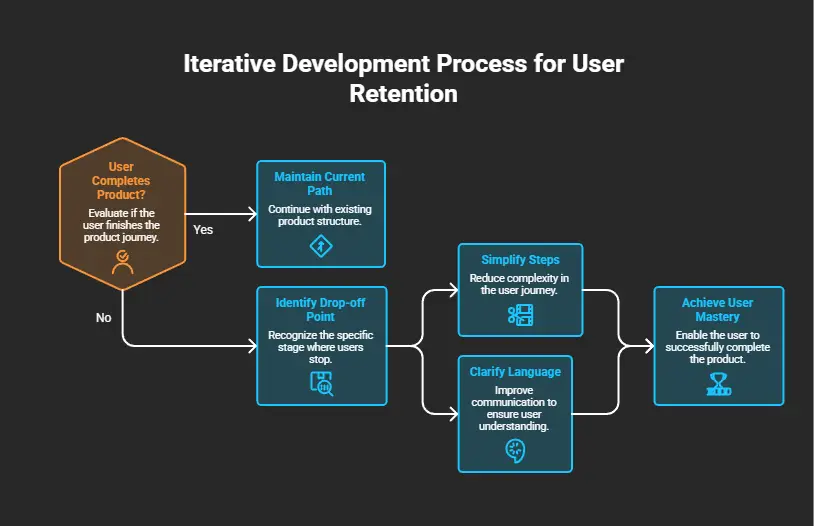
Retention is the ultimate metric.
If users start your product but don’t finish, you have a retention problem.
View these “bugs” as blockers in the user journey.
By simplifying the steps or clarifying the language, you turn a drop-off point into a clear path to mastery.
Diversity of Opinions: Testing Your Product with Non-Experts
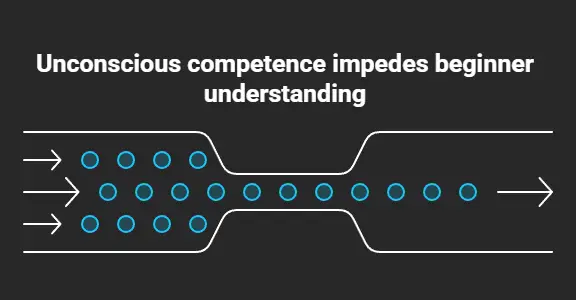
Test your product with people who have absolutely no context for your field.
If a total beginner can understand your core framework, you have successfully bridged the Genius Gap.
If they are lost, your “unconscious competence” is still getting in the way.
Building the Distribution Pipeline: Reaching Your Audience
The Apple Store Strategy: Creating a High-Value Digital Presence
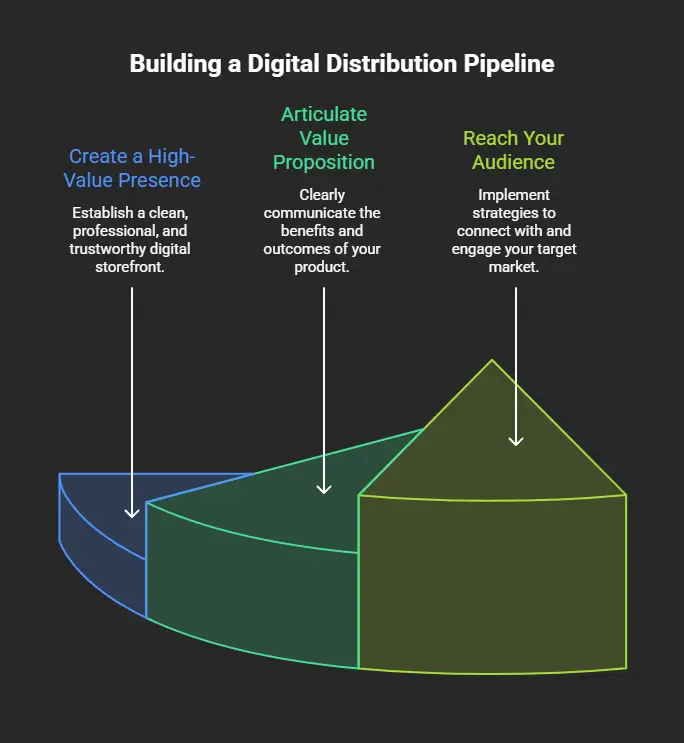
Think of your digital storefront as an app store.
It should be clean, professional, and trustworthy.
Your marketing materials should clearly articulate the value proposition: “I will take you from point A to point B using this exact system.”
Marketing Your “Genius”: How to Explain the Effortless as Essential
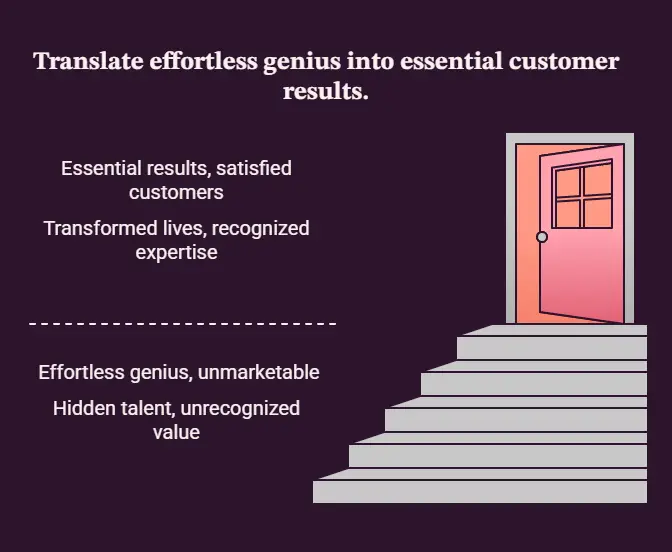
Marketing is not manipulation; it is translation.
Your job is to translate the “easy” work you do into the “essential” results your customers crave.
Do not sell “a course on photography.
” Sell “the ability to take professional, high-impact images with your existing equipment.
” Focus on the transformation.
Distribution Channels: From Social Proof to Direct Sales
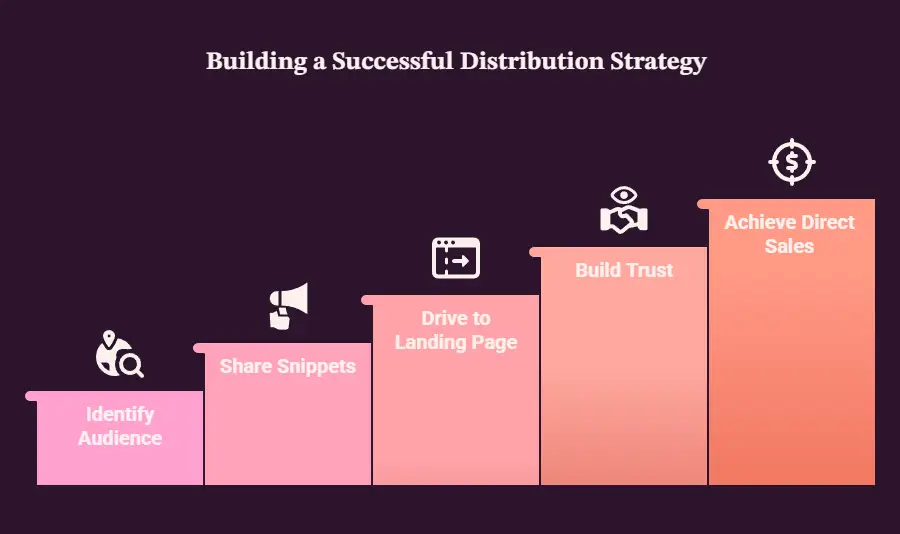
Start where your audience lives.
Use social media to share snippets of your system, then drive them to a direct-sales landing page.
Use social proof—testimonials from early testers who benefited from your “buggy” MVP—to build trust and momentum.
Managing the Creator’s Journey: Resilience and Professional Hygiene
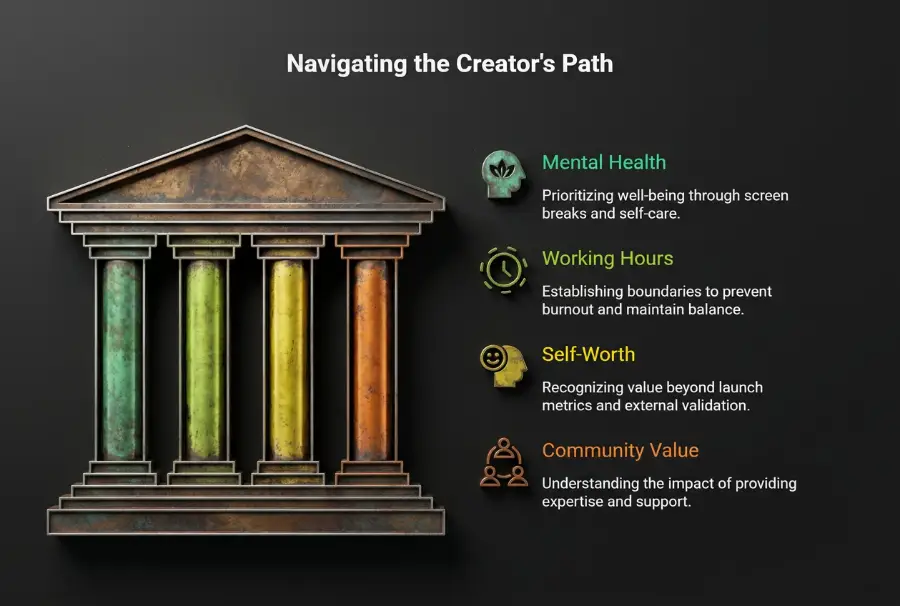
Building a digital product is a marathon, not a sprint.
Maintain your mental health by keeping your “professional hygiene” in check.
Set strict working hours, take time away from the screen, and remember that your worth is not tied to your launch numbers.
You are an expert providing value to a community.
Conclusion
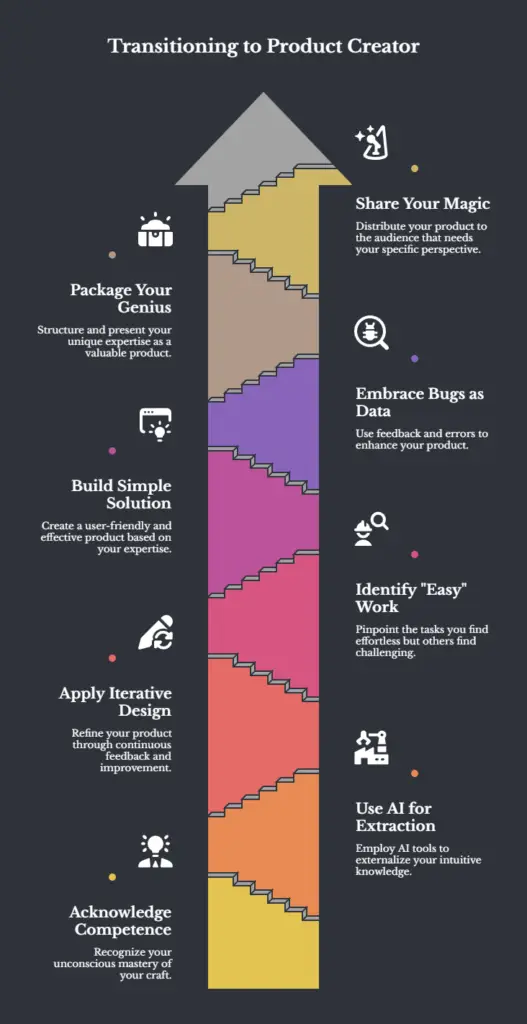
The Genius Gap is not a permanent barrier; it is a hurdle that exists because you have spent years mastering your craft.
By acknowledging your unconscious competence, using AI as a tool for extraction, and applying a rigorous, iterative approach to your product design, you can translate your intuition into a scalable asset.
Remember: the world doesn’t need another generic expert.
It needs your specific perspective, your unique system, and your ability to solve problems that others find impossible.
Start by identifying the “easy” work you do that others find baffling.
Use the “Macintosh” design ethos to build a simple, effective solution.
Embrace the “bugs” as data points, and iterate your way to a product that provides genuine, lasting value.
Your expertise is currently sitting in a vault; it is time to open it, package your genius, and share it with the audience that is waiting for your specific brand of magic.
The transition from practitioner to product creator is the next logical step in your evolution.
Start today.
