
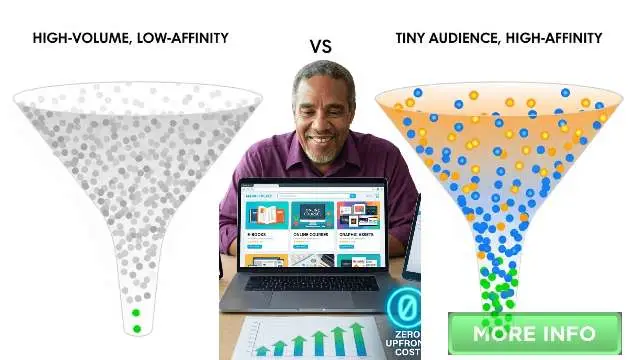
High-Volume: A smaller, highly engaged audience often yields significantly more conversions than a massive, indifferent following.
The traditional narrative of business success is often tethered to the vanity metrics of scale.
We are conditioned to believe that millions of followers and viral reach are the only gateways to revenue.
Yet, for many solo entrepreneurs, this obsession with volume is a trap.
It prioritizes surface-level things instead of important ones, causing marketing activities that burn out quickly and do not make meaningful income.
When you stop trying to please a large, indifferent crowd, you can build a sales system that converts well.
By understanding audience psychology and social psychology, you can transform your digital marketing efforts from a guessing game into a high-converting sales engine.
This article explores how to leverage intimacy, strategy, and precision to thrive in a noisy digital landscape.
The Myth of the “Mega-Following” and Why it Fails Solo Entrepreneurs

Many creators spend years chasing “mega-following” status, only to find that conversion rates remain stagnant.
A massive audience is often diffuse and misaligned with your core product.
For the small business owner, chasing vanity metrics is a structural error.
When you speak to everyone, you dilute your brand messaging to maintain broad appeal, resulting in lackluster engagement.
Scaling too early often breaks the delicate trust required for high-ticket sales.
Recognizing that you don’t need “everyone” allows you to pivot toward a more profitable, focused model.
The Intimacy Advantage: Why High-Affinity Beats High-Volume

High-volume audiences often result in low conversion rates, whereas a tiny, high-affinity audience acts as a powerful engine.
In a small group, you can cultivate relationships that mirror private coaching.
This intimacy allows for rapid iteration.
By focusing on depth, you create a loyal base that provides the social proof and word-of-mouth growth that paid advertising can rarely replicate.
Whether you are running a Disney travel blog or managing two websites for metabolic health, the goal remains the same: deep resonance with a specific target audience.
Shifting from Broad Marketing to Micro-Moments of Connection

Instead of treating your audience as a faceless list, treat every interaction as a micro-moment of connection.
A single, well-timed email that addresses a specific, painful struggle is more valuable than a dozen generic social media posts.
This requires a shift in mindset: stop “broadcasting” and start “conversing.” When you lower the barrier to entry, you invite the kind of feedback that turns a casual observer into a committed buyer.
The Reciprocity Principle: Leading with Value to Build Subconscious Debt

Human behavior is governed by the need to balance the scales.
When you provide substantial, unasked-for value, you create a sense of subconscious debt.
By sharing your best frameworks—perhaps for a scalp microbiome study or gaming industry insights—you prime your audience to view your paid product as the logical next step.
This isn’t manipulation; it’s building brand trust through consistent, high-value delivery.
The Verbatim Effect: Using Your Customer’s Own Words to Mirror Their Reality

One of the most potent psychological levers is the Verbatim Effect—the tendency for people to feel an instant connection to brands that use their own language.
When you conduct customer research, document the exact phrases your audience uses to describe their pain, whether it is “hair loss” or “career advice” stagnation.
When you mirror these phrases back on your product pages, you bypass skepticism and trigger immediate emotional validation.
Identity-Based Marketing: Aligning Your Brand Messaging with the Customer’s Lifestyle

People do not just buy products; they buy a vision of their future selves.
To convert effectively, your brand must represent an identity the customer aspires to claim.
Whether you are selling violin lessons for children of ambitious parents (a la Dr.
Julie Olson) or performance nutrition for busy executives, your marketing must align with the identity the client desires.
Conducting Deep Customer Research Without a Massive Database
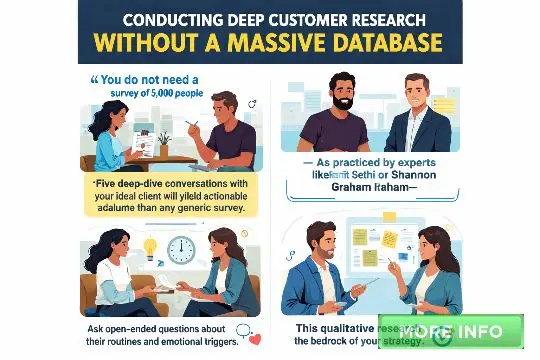
You do not need a survey of 5,000 people.
Five deep-dive conversations with your ideal client—as practiced by experts like Ramit Sethi or Shannon Graham—will yield more actionable data than any generic survey.
Ask open-ended questions about their daily routines and emotional triggers.
This qualitative research is the bedrock of your strategy.
Tailoring Your Research Approach for Maximum Insight
To maximize the impact of your customer interactions, tailor your approach to uncover insights that can truly transform your sales strategy. Begin by identifying the main challenges your audience faces. Choose participants who closely match your ideal customer profile to ensure relevance and depth in your findings.
- Open-Ended Questions: Start with broad questions to encourage your interviewees to share more. Ask, “What are your biggest challenges when it comes to [specific issue]?” or “Can you walk me through a typical day to see where [your product] might fit in?”
- Emotional Triggers: Probe for emotional responses, as these often drive purchasing decisions. Inquire about moments that brought them frustration or joy related to their problems. Understanding these emotional touchpoints allows you to craft messages that resonate deeply.
- Problem-Solution Discussion: Delve into past attempts to solve their issues. Ask, “What solutions have you tried in the past, and what were the outcomes?” This can illuminate gaps in the market that your product or service can fill.
- Behavior Patterns: Explore habits surrounding their problem area. Questions like, “How do you currently manage [issue] on a day-to-day basis?” can reveal
The Power of Specificity: Moving Beyond Generic Pain Points to Niche Solutions
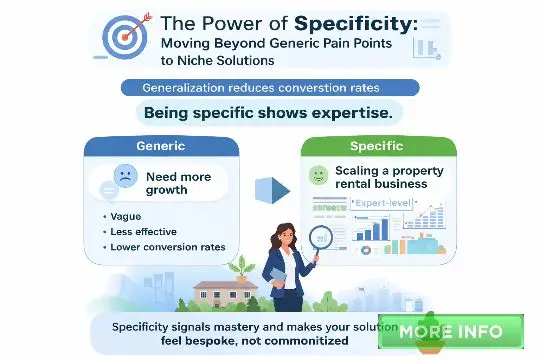
Generalization reduces conversion rates.
Being specific shows expertise.
If your marketing addresses vague issues like “needing more growth,” you will lose to specialists who address “scaling a property rental business.
” Specificity signals mastery and makes your solution feel bespoke, not commoditized.
Utilizing A/B Testing and Feedback Loops to Refine Your Offer
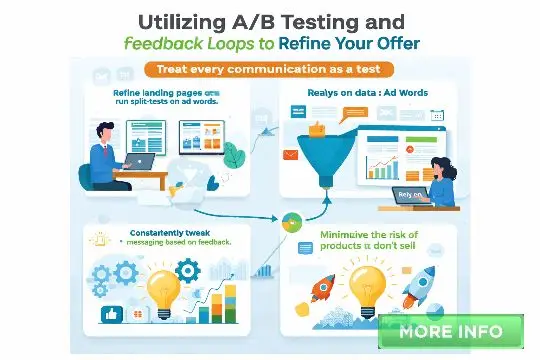
Treat every communication as a test.
Whether you are using Balsamiq Mockups to refine your landing page or running split-tests on ad words, you must rely on data.
By constantly tweaking your messaging based on actual feedback, you minimize the risk of launching products that don’t sell.
Establishing Yourself as an Authority Figure through Thought Leadership
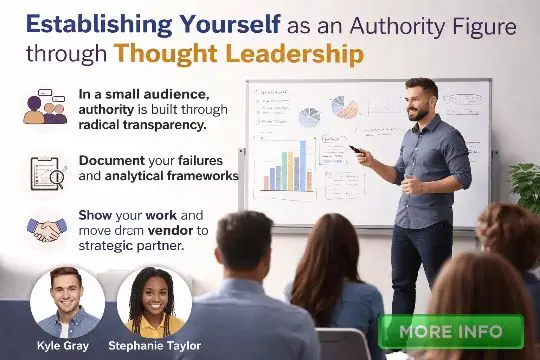
In a small audience, authority is built through radical transparency.
Document your failures and analytical frameworks.
When you show your work—like Kyle Gray or Stephanie Taylor might in their respective fields—you move from being a vendor to a strategic partner.
Strategic Social Proof: Leveraging Testimonials and Case Studies
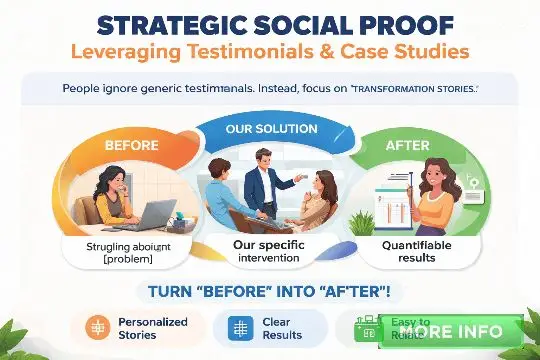
People ignore generic testimonials.
Instead, focus on “transformation stories.
” A strong case study details the “Before” state, your specific intervention, and the quantifiable “After” result.
This structure helps potential clients map your service directly onto their own lives, making the purchase feel like a natural next step.
The Visual Twist: Using User Experience and Typography to Signal Credibility

Professional typography, clean navigation, and a user-focused experience show that your business is high-end and organized.
In the psychology of consumption, a polished user experience signals that you hold your product to high standards.
Don’t underestimate how a “visual twist”—a unique design element—can differentiate you from competitors.
Scarcity and Urgency: Moving Customers from “Maybe” to “Now”

Use scarcity carefully but well.
This respects your customers’ decision-making process.
Whether it is limited-time offers or capped enrollment for a course launch, you must provide a reason to act.
Without a constraint, the brain defaults to inaction.
Cognitive Contrast: Framing Cost versus Value to Neutralize Price Resistance
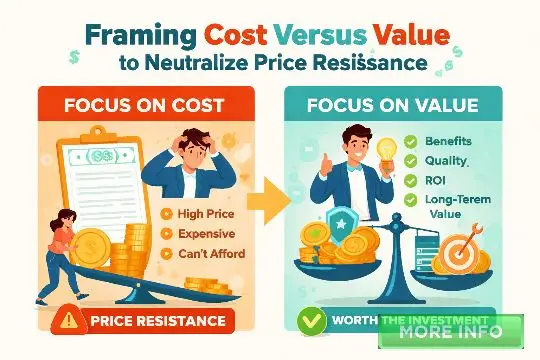
To neutralize price resistance, frame the cost of your product against the much higher cost of the problem remaining unsolved.
If your service costs $5,000, but it saves the client $50,000, the choice becomes a mathematical certainty rather than an emotional struggle.
The Commitment Method: Using Small Wins to Lead to Larger Sales
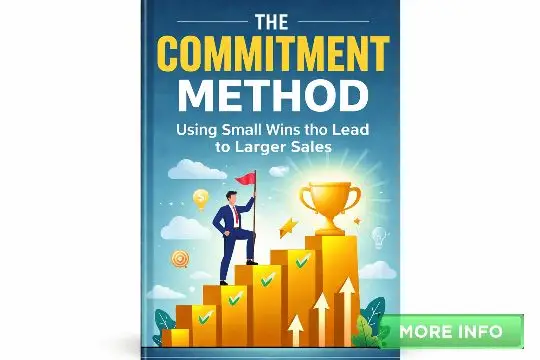
The Commitment Method is built on consistency.
Offer a low-cost, high-value entry point—such as a template or mini-workshop.
Once the client experiences a win, their brain categorizes you as a trusted authority, making the jump to a higher-ticket membership program or course much easier.
Crafting High-Converting Email Campaigns and Newsletters
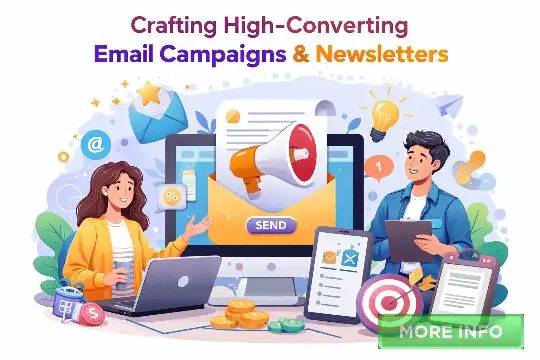
Email allows direct and personal communication, which is different from social media algorithms.
Every campaign should be designed with a clear psychological objective: to educate, build trust, or close a sale using a strong call to action.
Productizing Services: Transforming Expertise into Scalable Information Products
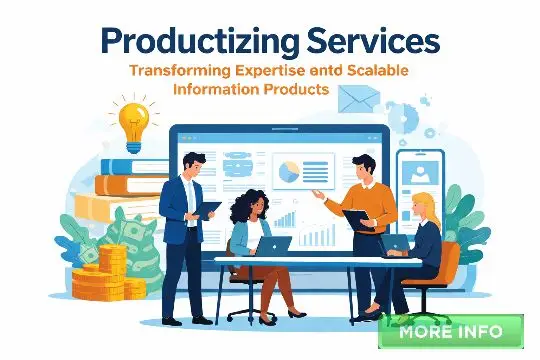
One-on-one services are difficult to scale.
By productizing your knowledge into courses or templates, you transform expertise into a repeatable asset.
This allows for higher margins and greater lifestyle balance, as seen in the work of successful solo entrepreneurs.
Optimizing the Checkout Process and Navigation to Reduce Friction
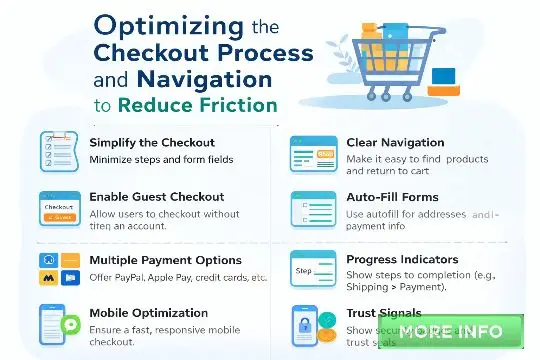
Conversion is often killed by technical friction.
If your checkout processes are complex, even an emotionally primed buyer will churn.
Audit your path to purchase; every extra field in a form is a potential barrier to your revenue.
Why Low Prices Can Kill Brand Trust in Niche Markets

In a small, specialized market, low prices can be detrimental.
They signal that you lack confidence or that your product is a mere commodity.
Pricing is a signal of value; a premium price attracts clients who are serious about their transformation.
Anchoring and Tiered Pricing: Guiding the Customer to the Right Choice
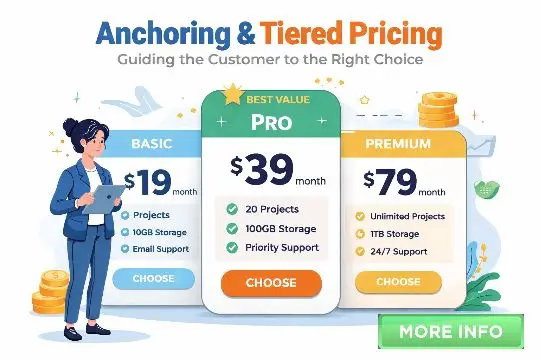
Use the decoy effect or tiered pricing to guide your customer.
By offering three tiers, you anchor their perception of value.
The middle tier should provide the most profit, serving as the “golden mean” that most users naturally select.
Upselling and Cross-selling: Maximizing Revenue per Client
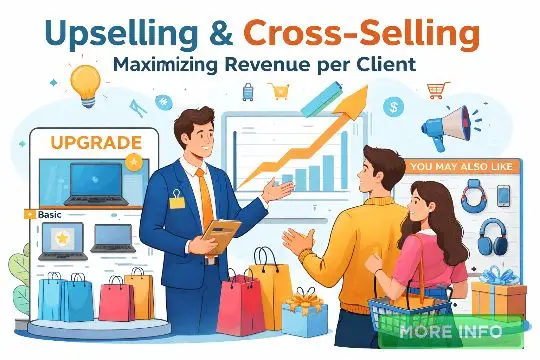
The sale does not end at the checkout.
Once you have earned trust, offer complementary services that build upon the initial success.
This increases the lifetime value of every client and stabilizes your revenue stream.
Conclusion
Building a high-converting sales engine is a process of ongoing improvement, not a quick task.
Instead of chasing mass marketing numbers, focus on deeply connecting with a small, loyal audience.
You should stop focusing on vanity metrics from mass marketing; instead, focus on the psychology of deep connection.
This approach creates a business that is very profitable and personally fulfilling.
By understanding your audience’s psychology and keeping your research thorough, messaging clear, and sales smooth, you become a partner in your client’s success.
A “tiny” audience can be more than enough to build a lasting legacy.
Leverage your unique insights, maintain high standards of social proof, and keep iterating.
Your transformation from a vendor to a guide starts today.
