
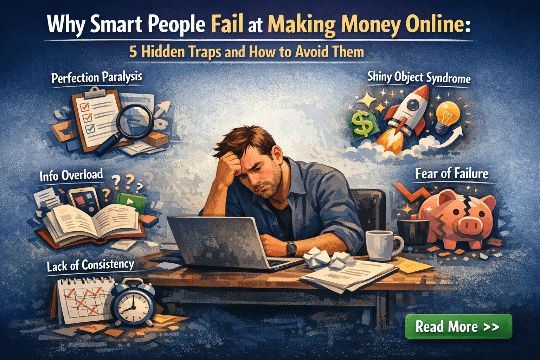
Many highly intelligent individuals navigate the professional world with ease, yet they frequently encounter a wall when attempting to generate income online.
They possess the cognitive capacity to grasp complex systems, learn new skills rapidly, and solve intricate problems.
However, they often mistake these academic strengths for entrepreneurial success, leading to a recurring pattern of stalled growth.
The “Smart Person’s Paradox” is simple: in an environment where speed, iteration, and market feedback are the primary drivers of growth, deep intellectual rigor can often become a liability.
By prioritizing theoretical perfection over practical execution, many bright minds inadvertently build businesses that serve their egos rather than the market.
The Paradox of Intelligence in the Digital Economy
Why Traditional Academic Success Doesn’t Translate to Online Income
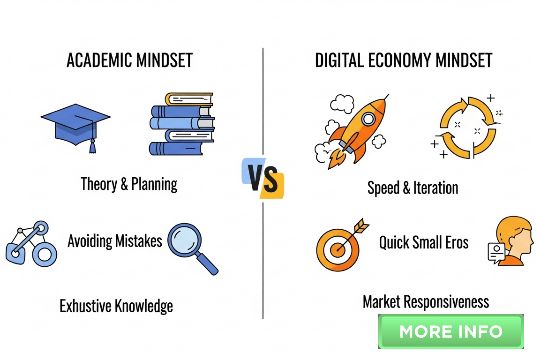
Academic environments reward mastery of theory, careful planning, and the exhaustive accumulation of knowledge.
In university, success is defined by how well you prepare before the exam.
However, the digital economy operates on a diametrically opposed set of rules.
Online income is not a reward for being the smartest person in the room; it is a reward for being the most responsive.
When an academic mindset meets the unpredictability of the internet, the result is often “paralysis by analysis.
” You are trained to avoid mistakes, whereas digital entrepreneurship is fueled by making quick, small errors to identify what actually works.
The “Smart Person’s Paradox”: When Your Greatest Asset Becomes Your Biggest Liability

High-IQ individuals often possess a “buffer” of intelligence that allows them to rationalize inaction.
You might tell yourself you are being “thorough” by researching for months, or that you are being “professional” by perfecting your infrastructure.
In reality, you are using your intellect to delay the moment of truth: putting your product or service in front of a paying customer.
This is the central friction point for entrepreneurs who treat business as an academic subject rather than a field of active experimentation.
Trap 1: The “University Trap” (Endless Consumption vs. Creation)
The Cycle of Just-In-Time Learning on Udemy and Coursera

Platforms like Udemy and Coursera are double-edged swords.
They offer the democratization of knowledge, but for the intellect-driven entrepreneur, they often serve as a sanctuary for procrastination.
You convince yourself that a new certification or a deep-dive course is “market research,” yet you are simply consuming.
This “just-in-case” learning is a common trap.
You feel productive because you are working, but you are not producing.
Why High-IQ Individuals Procrastinate Through Research

Smart people love to learn because it is safe.
Learning a new subject provides the dopamine hit of progress without the risk of public rejection.
If you are struggling to build an online income, ask yourself: is your latest course actually moving the needle, or is it a mechanism to avoid the anxiety of cold outreach, content creation, or product sales?
Shifting to Just-In-Time Learning and Immediate Implementation
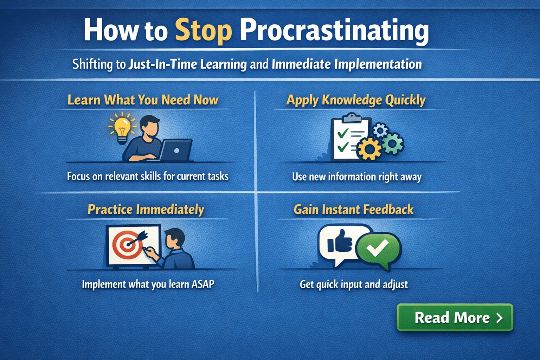
The shift required is a move toward “just-in-time” learning.
Do not learn a skill until the specific problem you are facing demands it.
If you need to build a landing page, learn only the specific technical components required for that page.
This keeps your intellect focused on execution rather than theoretical mastery, ensuring every hour of study is immediately converted into an asset.
Trap 2: Over-Engineering the Infrastructure
The Fatal Flaw of the 50-Page Business Plan
The traditional business plan is a relic that often traps smart people.
It encourages the creation of complex financial models and long-term projections that are fundamentally speculative.
In the digital space, a 50-page document is usually a distraction.
If you cannot explain your revenue model on a single sheet of paper, you do not have a business; you have a hypothesis that needs testing.
Building “Gold-Plated” Solutions for Problems That Don’t Exist
There is a temptation to build the “perfect” ecosystem—a complicated membership site, a highly customized CRM, or an intricate automated funnel—before you have made a single dollar.
This is over-engineering.
Your primary goal is to find product-market fit.
Every hour spent customizing the backend of your business is an hour stolen from finding your first customer.
Using Trello and Asana for Lean Project Management Instead of Complexity
Tools like Trello or Asana are often misused by intellectuals as repositories for “to-do” lists that never end.
Instead of using these platforms to add features, use them to enforce constraints.
Limit your work to three high-impact tasks per week.
If a project in Trello starts to look like a sprawling, multi-layered beast, cut it back.
Focus on the core mechanism that generates revenue.
How to Build a Minimum Viable Product (MVP) Without the Bloat
The MVP is the antidote to perfectionism.
It is not a “beta” version that you hide; it is the smallest possible iteration of your value proposition that you can offer for money.
If you can sell a simplified version of your offering, you have immediate data.
If nobody buys the MVP, you have saved yourself months of work on a “gold-plated” product that the market never wanted.
Trap 3: Intellectual Arrogance and the Assumption Gap
Why “Knowing What’s Best” for the Customer Leads to Failure
High-IQ entrepreneurs often believe that because they understand a subject deeply, they know exactly what the customer needs.
This is the Assumption Gap.
You are not your customer.
Your expertise might actually blind you to the simple, often “painful” problems that customers are willing to pay to solve.
Replacing Intuition with Market Research and Real-World Data
Replace your intuition with empirical evidence.
If you think your audience wants a complex masterclass, stop and test that hypothesis.
Use SurveyMonkey to gather quantitative data from your target demographic.
Ask them what keeps them up at night.
The goal is to let the data dictate your direction, not your internal monologue.
Utilizing SurveyMonkey and Social Media to Validate Ideas Before You Build
Social media is more than a marketing channel; it is the world’s largest, free laboratory.
Before launching a product, use your profiles to poll your audience or share raw ideas.
If a topic receives high engagement, you have validated the demand.
If it is met with silence, you have saved yourself the trouble of building it.
The Importance of Intellectual Humility in the Testing Phase
True intellectual humility is the ability to say, “My idea was wrong, but the data is right.
” When the market rejects your product, don’t blame the marketing or the timing.
Accept that the hypothesis was flawed and pivot.
This is the hallmark of the elite entrepreneur.
Trap 4: The “Invisible Product” Syndrome (Ignoring Distribution)
The Myth That “Good Products Sell Themselves”
The most dangerous belief for an intelligent entrepreneur is the “Field of Dreams” fallacy: “If I build it, they will come.
” In the digital economy, the product is secondary to the distribution.
You can have the most brilliant course or the most innovative software, but if you do not have a distribution strategy, your work is effectively invisible.
Why Smart People Overlook Digital Marketing and SEO Basics
Many smart people find digital marketing distasteful, viewing it as “gimmicky” or “salesy.
” They prefer to focus on the technical or creative aspects of the product.
However, SEO and content distribution are simply methods of solving the discoverability problem.
If you don’t engage with these systems, you are choosing obscurity.
The Role of a Backlink Profile and Authority Building in Long-Term Growth
A strong backlink profile is not just an SEO metric; it is a sign of market trust.
It proves that other entities acknowledge your authority.
Treating your business as an authority-building machine is the only way to ensure long-term, scalable traffic that doesn’t rely on expensive paid ads.
Balancing Product Development with Aggressive Promotion Strategies
Adopt a 50/50 rule: spend half your time on product development and the other half on promotion.
If you aren’t spending time on social media and outreach to get your work in front of people, you are not building a business; you are building a hobby.
Trap 5: Optimization Paralysis and the Perfectionism Loop
The Danger of Micro-Optimizing a Business That Has Zero Customers
It is easy to get caught up in changing button colors, tweaking website copy, or obsessing over minor speed improvements.
These are “vanity” activities.
Optimization is for scaling; if you aren’t yet generating consistent revenue, you are in the discovery phase, not the optimization phase.
Using Google Analytics to Distinguish Between “Vanity Metrics” and “Growth Metrics”
Google Analytics can be overwhelming, which is why you must focus on specific data.
Ignore “total visits” or “time on page” if they don’t correlate to your business goals.
Focus on conversion rates and acquisition channels.
That is where the truth lies.
If 1,000 people visit your site and nobody buys, your traffic isn’t the problem—the value proposition or the offer is.
Applying Data Analysis to the 80/20 Rule: Finding Your Highest-Leverage Tasks
The 80/20 rule states that 80% of your results come from 20% of your efforts.
Use your data analysis to identify which 20% of your tasks are actually driving revenue.
Everything else is secondary.
If writing content brings in leads but tweaking your site design doesn’t, stop tweaking.
Double down on the writing.
Embracing “Good Enough” to Maintain Momentum
Perfectionism is a form of procrastination.
An imperfect product that is live and being sold is infinitely more valuable than a perfect product that exists only in your head.
Aim for “good enough” to launch, then use real-world feedback to iterate toward excellence.
How to Transition from “Thinker” to “Entrepreneur”
Developing a Bias for Action Over Analysis
The ultimate transition for the intelligent entrepreneur is developing a “bias for action.
” You must learn to treat every business decision as a scientific experiment.
Form a hypothesis, build a test, gather the data, and iterate.
Stop seeking certainty before you begin.
Certainty is only found at the end of the process, and you only get to the end by taking the first, imperfect step.
Conclusion
Making money online is not about being the smartest person in the room; it is about being the most adaptable.
You have the intellectual capacity to master complex topics, but you must now apply that capacity to the messy, non-linear world of the market.
By recognizing these five traps—the University Trap, Over-Engineering, Intellectual Arrogance, The Invisible Product, and Optimization Paralysis—you can shed the habits that have held you back.
Remember: progress is defined by what you ship, not what you know.
Shift your focus from academic consumption to market-driven execution.
Use your data tools like Google Analytics and SurveyMonkey to stay objective and humble.
Leverage platforms like Trello and Asana to limit your scope, not expand it.
If you stop trying to “solve” the business as if it were a textbook problem and start engaging with it as a series of iterative tests, you will find that your high IQ finally becomes the strategic advantage it was always meant to be.
Start your next project today, not with a plan, but with a hypothesis.
Get it in front of the market as quickly as possible, and let the real-world feedback refine your trajectory.
Your journey from thinker to entrepreneur begins the moment you prioritize action over intellect.
