

The era of the simple chatbot is over.
For years, companies have relied on basic interfaces that offer canned, reactive responses, failing to move the needle for users or businesses.
To capture attention in the current digital landscape, you must pivot from passive AI tools to autonomous AI systems.
We are entering the age of agentic AI—software that doesn’t just chat, but executes complex, multi-step workflows to deliver genuine business outcomes.
If you want to go viral, you must build tools that generate personalized, shareable value.
This guide provides the secret playbook for moving from a standard GPT wrapper to a high-growth, revenue-generating autonomous engine.
Defining Agentic AI: From Passive Queries to Autonomous Action
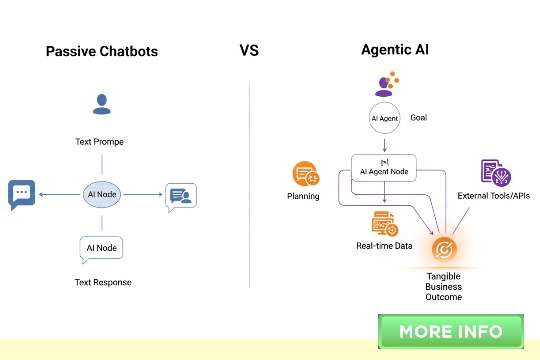
The evolution of AI: While traditional chatbots rely on simple, reactive prompts, Agentic AI proactively plans and executes multi-step workflows using external tools.
While traditional chatbots are limited to reactive, single-turn responses, agentic AI proactively plans and executes multi-step workflows to achieve specific goals.
Unlike basic generative AI, which creates text or images upon request, autonomous artificial intelligence systems function as digital agents capable of reasoning, planning, and executing tasks across various software ecosystems.
By connecting Large Language Model (LLM) intelligence to external tools and real-time data, these agents bridge the gap between user intent and tangible results.
The Shift from “Utility Tools” to “Digital Employees”

Users are tired of being their own project managers.
They don’t want another interface to prompt; they want a “digital employee” that handles the grunt work.
When your artificial intelligence solution handles the end-to-end workflow—from lead qualification to CRM entry—it transforms from a novelty into an essential piece of infrastructure.
This transition from “utility” to “employee” is where the real value lies, turning your product into a indispensable partner for any small business.
Why the Market is Pivoting from GPT Wrappers to Autonomous Systems

Simple wrappers are dying because they offer zero defensibility; anyone can replicate a basic prompt.
The market is currently rewarding platforms that provide tangible results over those that simply repackage OpenAI platforms.
By focusing on autonomous AI systems that integrate deep workflows and private data, developers can build products that are truly proprietary and difficult for competitors to copy.
Identifying the “High-Share” Pain Point: Solving Problems, Not Just Answering Questions

Virality starts with a specific, high-friction pain point.
People don’t share general tools; they share solutions that save them time or provide unique status.
Identify a bottleneck in a niche professional field—such as compliance auditing, complex customer service triage, or specialized content creation—and build an agent that solves it instantly.
When your agent fixes a problem that currently consumes hours of manual labor, you have found the foundation for a viral loop.
Engineering the “Magic Moment”: Using Generative AI to Create Personalized Awe
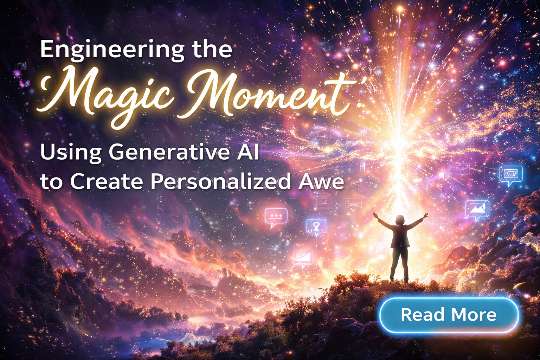
The “magic moment” is the exact point a user experiences the utility of your agent.
This must be instantaneous and highly personalized.
If an AI agent can analyze a user’s data and generate a bespoke strategy in seconds, the user is likely to share that result.
This is where personalized experiences drive organic growth; by using generative AI to tailor outcomes to the individual, you transform a standard interaction into a moment of awe.
Case Studies in Virality: How UMax, Cal AI, and RizzGPT Won the Internet

These products succeeded because they focused on a singular, “vulnerable” consumer need.
By providing immediate, AI-driven feedback—whether it’s scoring a profile picture or booking a meeting through Cal AI—they turned an interaction into social currency.
Users shared their results because the output felt like a reflection of their personal brand, perfectly illustrating how to use AI experiments to generate mass appeal.
The Developer’s “Secret Sauce”: Leveraging Cursor and React Native

Speed is your biggest advantage.
Using an AI-native code editor like Cursor allows you to iterate on features at lightning speed.
By building with React Native, you ensure your agent is accessible on both mobile and desktop, reaching users exactly where they live their professional lives.
This cross-platform accessibility is crucial for maintaining the consistent customer experience required for viral adoption.
Backend Simplicity: Scaling with Supabase, Convex, and Expo
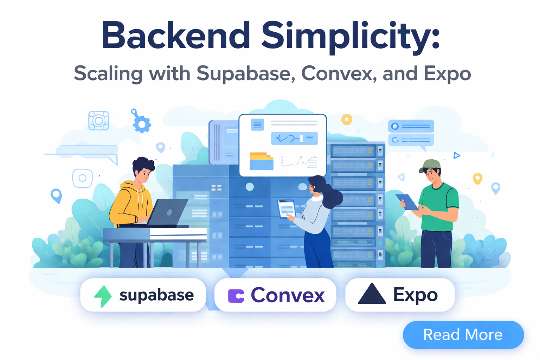
Do not over-engineer your backend.
Platforms like Supabase and Convex provide instant database and authentication layers, while Expo handles the mobile deployment hurdles.
This combination allows you to focus your energy on the agent’s logic rather than server maintenance, which is vital when scaling an AI platform to thousands of concurrent users.
Integrating Intelligence: Connecting Large Language Models (LLMs) with Retrieval-Augmented Generation (RAG)

Your agent is only as smart as its context.
By implementing Retrieval-Augmented Generation (RAG), you connect your model to a proprietary knowledge base, such as relevance AI or custom document stores.
This ensures your agent provides factual, industry-specific answers rather than generic AI fluff.
A well-constructed RAG pipeline is the difference between a toy and a professional tool.
Moving Beyond Simple Prompts: Implementing Decision-Making Logic
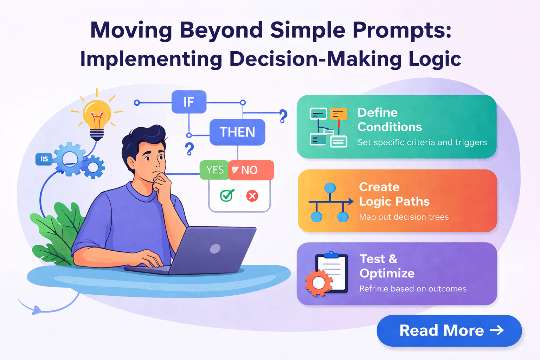
Agents need to make choices.
Use frameworks that allow the AI to evaluate a task, check for missing information, and decide whether to ask the user or perform an external search.
This decision-making layer is what elevates your product from a chatbot to an autonomous agent, enabling true workflow automation.
Automating the User Journey: Using Zapier and AutoGPT for Background Task Completion
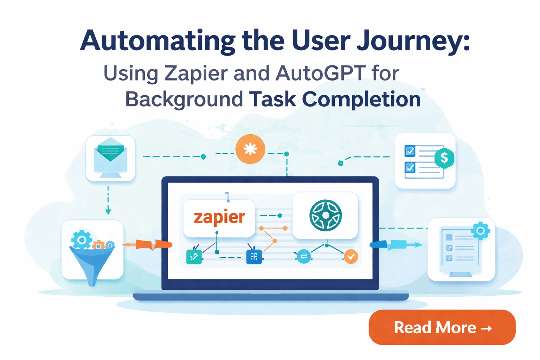
Connect your agent to the outside world using integration platforms like Zapier.
Whether it is automatically updating a Google Sheet or sending a Slack notification when a lead is captured, these integrations create a seamless journey.
The user should rarely have to move data; the agent should do it for them, functioning as a silent, background engine.
Developing a Feedback Loop: How Agentic Systems Improve Through Autonomous Learning
Implement a system where the AI learns from successful vs.
failed outcomes.
By tracking user interactions and storing positive refinements, your agent becomes more accurate over time.
This creates a moat, as your product gathers the necessary data to perform better than any competitor, using predictive analytics to anticipate user needs before they are stated.
Social-First Architecture: Designing for TikTok and Instagram Algorithm Traps

Your agent’s output should be visually striking.
Design your UI to generate results that are ready to share on Instagram or LinkedIn.
Think of the output as a piece of content.
If the result is a beautifully formatted summary or a punchy insight, the user will inherently want to brag about it online, creating A/ Organic viral content.
Turning AI-Generated Insights into Shareable Lead Magnets
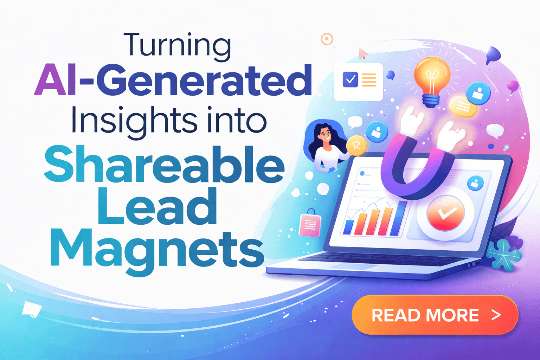
Position your agent as a powerful lead magnet.
Offer a free version that delivers a high-value insight in exchange for an email address.
This allows you to build a community while simultaneously demonstrating the power of your full-scale autonomous system, turning casual browsers into qualified prospects.
Leveraging Content Variation: Using AI to Document the Build-in-Public Process

Documentation is marketing.
Use your own agent to help write content as you build.
Share your challenges, your code snippets, and your failures.
By generating variations of your journey for different social channels, you create a loyal audience that feels invested in your success.
The Micro-SaaS Path: Scaling Subscription Revenue through App Stores

The simplest way to get paid is through a tiered subscription model.
Solve one specific problem well, and charge a monthly fee for the automation.
Small business owners are happy to pay for tools that demonstrably save them five hours of work per week, providing a stable path to recurring revenue.
The AI Agency Pivot: Selling Complex Workflow Automation to Small Businesses
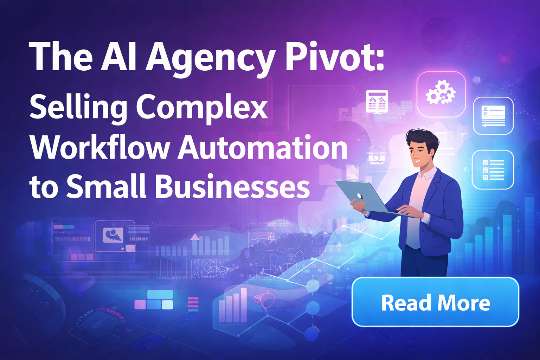
If you aren’t ready to build a standalone SaaS, start an AI agency.
Approach businesses and offer to build custom agentic workflows for their customer service or marketing departments.
This is a high-ticket service that allows you to test your tech on real business cases before productizing the solution.
Lead Qualification and High-Ticket Sales: Using Agents to Close Deals on Autopilot

Use agents to handle your own sales funnel.
Build an agent that can qualify incoming leads, answer technical questions, and schedule discovery calls.
By automating the top of your funnel, you reclaim time to focus on high-touch, high-value client relationships, leveraging recommendation engines to ensure the right lead gets the right offer.
Solving the Hallucination Problem: Establishing a Factual Source of Truth

Hallucinations are the death of trust.
To scale, you must ground your agent in a verified source of truth.
Use structured data schemas and rigorous testing to ensure that your agent never fabricates facts.
In a business context, reliability is more important than creativity.
Data Security and Governance: Protecting User Privacy in Autonomous Systems

If you are handling customer data, data security is non-negotiable.
Ensure that all user information is encrypted and that your agents operate within strict privacy frameworks.
Transparency regarding how data is handled will become a key selling point as your business grows and your reputation as a leader in autonomous AI systems spreads.
Performance Metrics that Matter: Moving from Engagement to Business Outcomes

Stop tracking “vanity metrics” like clicks or views.
Track performance metrics that reflect business outcomes: how much money did you save the user? How many hours did you return to their week? When your dashboard reports clear, revenue-positive results, you stop being an experiment and start being an indispensable partner.
Conclusion

The path to virality with agentic AI is not about technical wizardry alone; it is about merging powerful, autonomous decision-making logic with a user experience that demands to be shared.
By moving away from passive bots and into the realm of autonomous artificial intelligence systems, you can build products that solve real-world problems while capturing significant market share.
Key takeaways for your journey include:
- Prioritize Utility: Focus on solving high-friction pain points that allow for personalized, shareable outputs.
- Build to Scale: Use tools like Supabase and Cursor to build MVPs quickly and ground your LLMs in Retrieval-Augmented Generation to ensure reliability.
- Document the Build: Leverage a build-in-public strategy to grow your audience, turning them into your first loyal users.
- Focus on Outcomes: Always align your AI strategy with measurable business outcomes rather than just technical benchmarks.
The transition from passive AI to autonomous agents offers a once-in-a-generation opportunity to build products that scale.
Do not settle for simple chat interfaces; aim for intelligent systems that perform.
Start small by identifying a painful manual task, build a reliable agent to automate it, and distributing your success by making the user the hero of the story.
The playbook is set—now it is time for you to build and ship.
